Carbon pricing is one of the most widely recommended tools for tackling climate change, yet it remains poorly understood outside policy circles. At its core, carbon pricing puts a cost on greenhouse gas emissions, making polluters pay for the damage their emissions cause and giving businesses and households a financial reason to cut them. This guide explains what carbon pricing is, how it works, where it's used, and why it remains one of the most debated tools in climate policy.
What Is Carbon Pricing?
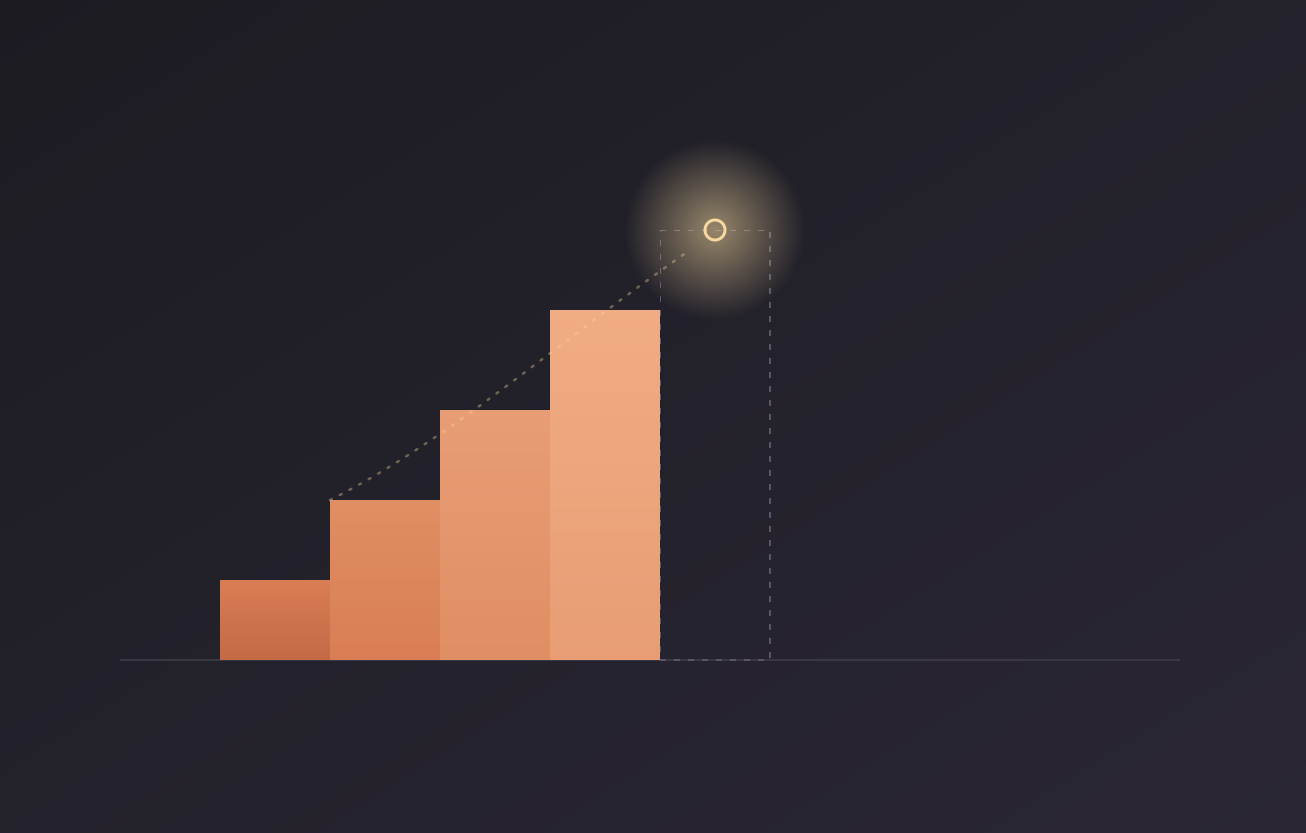
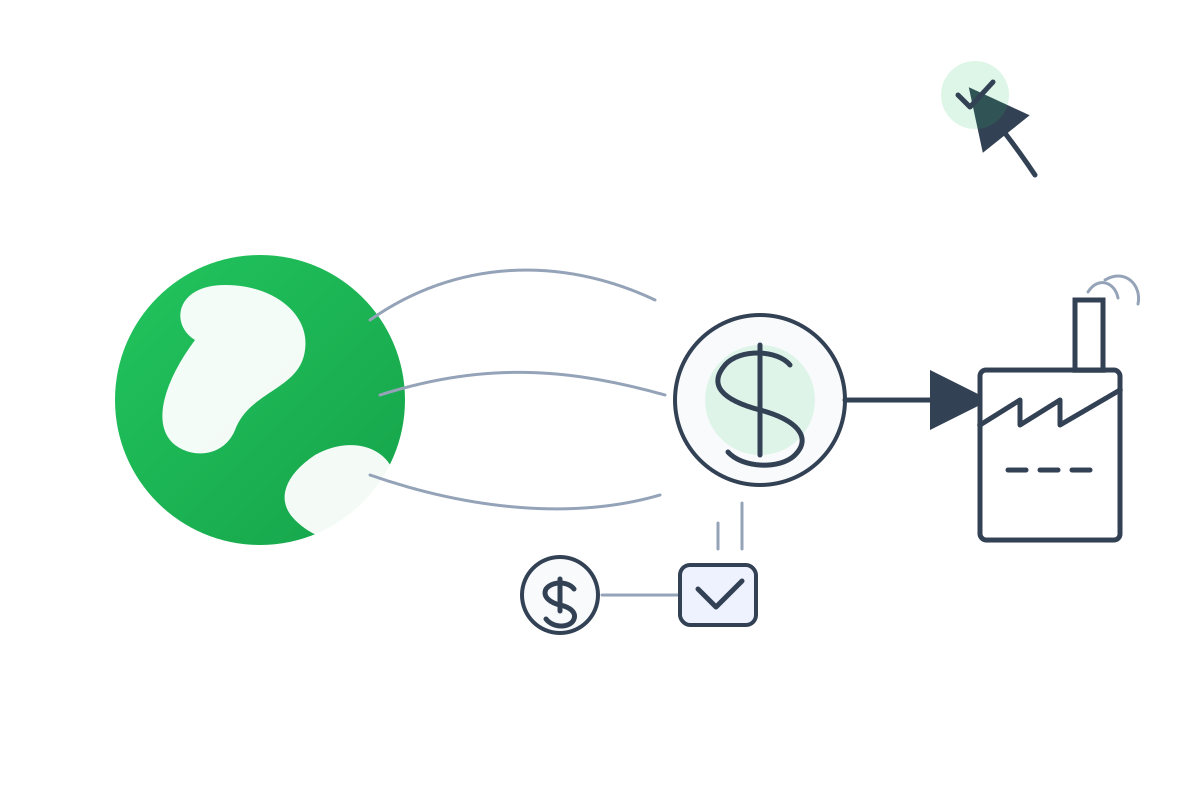
Carbon pricing is a policy approach that assigns a monetary cost to emitting carbon dioxide and other greenhouse gases. The logic is straightforward: emissions create costs for society, in the form of extreme weather, rising sea levels, and public health impacts, but those costs aren't normally reflected in the price of fossil fuels or carbon-intensive goods. Carbon pricing corrects this by making emitters pay for the pollution they generate, shifting the financial burden from the public to the polluter.
The underlying idea is simple: when emitting carbon has a price, businesses and individuals have a direct financial incentive to reduce emissions, switch to cleaner alternatives, or invest in more efficient technology.
How Does Carbon Pricing Work?
There are two main mechanisms governments use to price carbon: carbon taxes and emissions trading systems. Both aim to reduce emissions, but they take different routes to get there.
Carbon Taxes
A carbon tax sets a fixed price per tonne of CO2 (or CO2-equivalent) emitted. Governments typically apply this tax at the point where fossil fuels enter the economy, such as at extraction, import, or distribution, and the cost is passed down through the supply chain. Because the price is fixed, businesses know exactly what they'll pay per tonne, which makes carbon taxes relatively predictable and simple to administer. What isn't guaranteed is the exact level of emissions reduction, since that depends on how strongly businesses and consumers respond to the price signal.
Emissions Trading Systems (Cap-and-Trade)
An emissions trading system, often called cap-and-trade, works differently. Regulators set a cap on total emissions allowed across a sector or economy, then issue a fixed number of allowances (permits to emit one tonne of CO2). Companies that emit less than their allowance can sell the surplus; companies that need to emit more must buy additional allowances on the market. This creates a price for carbon that fluctuates with supply and demand, and unlike a carbon tax, the emissions outcome is fixed by the cap while the price floats.
The EU Emissions Trading System (EU ETS) is the largest and longest-running example, covering power generation, industry, and aviation across the European Union.
Why Do Governments Use Carbon Pricing?
Carbon pricing is popular among economists because it's generally considered a cost-effective way to cut emissions. Rather than governments dictating exactly how each sector must decarbonise, a carbon price lets businesses decide the cheapest way to reduce their own emissions, whether that means switching fuels, improving efficiency, or investing in new technology. In theory, this means emissions reductions happen where they're cheapest to achieve, lowering the overall cost to the economy.
Carbon pricing also generates revenue. Governments have used this revenue in different ways: funding clean energy investment, returning it to citizens as a rebate, or reducing other taxes such as income tax.
Carbon Pricing Around the World
As of the mid-2020s, carbon pricing mechanisms cover a significant, though still partial, share of global emissions. Some notable examples include:
- European Union: The EU ETS is the world's largest carbon market by value, and the EU has extended carbon pricing further through its Carbon Border Adjustment Mechanism (CBAM), which applies a carbon cost to certain imports.
- Canada: Operates a federal carbon pricing backstop, combining a fuel charge with an output-based system for large industrial emitters.
- China: Runs the world's largest emissions trading system by covered emissions, currently focused on the power sector.
- Sweden: Has one of the highest carbon tax rates globally and has maintained it alongside strong economic growth, often cited as a case study for how carbon taxes and growth can coexist.
Despite this expansion, a large share of global emissions still isn't covered by any carbon price, and prices vary enormously between jurisdictions, from a few dollars a tonne to well over a hundred.
Benefits of Carbon Pricing
- Economic efficiency: Lets the market find the cheapest emissions reductions rather than mandating specific technologies.
- Revenue generation: Creates public funds that can support clean energy, offset costs for lower-income households, or reduce other taxes.
- Predictability (for carbon taxes): Gives businesses a clear, stable cost to plan long-term investment around.
- Emissions certainty (for cap-and-trade): Guarantees a specific emissions ceiling, which taxes alone can't do.
Challenges and Criticisms
Carbon pricing isn't without its problems, and it's worth being honest about the limitations.
- Regressive impact: Higher fuel and energy costs can disproportionately affect lower-income households unless revenue is specifically redistributed to offset this.
- Carbon leakage: Businesses may relocate production to countries with weaker or no carbon pricing, shifting emissions rather than cutting them. This is part of the reason mechanisms like CBAM exist.
- Political resistance: Visible price increases on fuel and energy are politically unpopular, and several carbon tax proposals have been scaled back or repealed after public backlash.
- Price volatility: Emissions trading systems can see prices swing significantly, undermining the investment certainty businesses need to plan.
- Insufficient price levels: In many jurisdictions, carbon prices remain too low to drive the scale of decarbonisation needed to meet climate targets.
Carbon Pricing vs Carbon Offsets
Carbon pricing and carbon offsets are often confused, but they work differently. Carbon pricing is a regulatory mechanism, a government-set cost applied to emissions within a jurisdiction. Carbon offsets are project-based credits that represent an emissions reduction or removal elsewhere, which businesses can buy voluntarily (or, in some compliance markets, to meet obligations) to compensate for their own emissions. Offsets have faced significant scrutiny in recent years over questions of additionality and whether claimed reductions are real, whereas carbon pricing applies directly to the emitter without relying on third-party projects.
The Future of Carbon Pricing
Carbon pricing coverage and price levels are both expected to grow over the coming years, driven partly by international pressure and partly by mechanisms like CBAM, which effectively export carbon pricing incentives to trading partners without one. That said, the pace and consistency of this expansion vary enormously by region, and closing the gap between current carbon prices and the levels needed for climate targets remains an open and contested question.
Frequently Asked Questions
What is an example of carbon pricing?
The EU Emissions Trading System and Sweden's carbon tax are two of the most cited examples, representing the two main approaches: cap-and-trade and a fixed carbon tax.
Who pays for carbon pricing?
Directly, the businesses and entities that emit greenhouse gases or supply fossil fuels pay. Indirectly, some of this cost is often passed on to consumers through higher prices for fuel, energy, and carbon-intensive goods.
Does carbon pricing actually reduce emissions?
Evidence suggests carbon pricing does reduce emissions where prices are set high enough and cover a significant share of the economy, though results vary by jurisdiction and the price level in place.
What's the difference between a carbon tax and cap-and-trade?
A carbon tax fixes the price per tonne of emissions and lets the market determine the emissions outcome. Cap-and-trade fixes the emissions outcome (the cap) and lets the market determine the price.