A space heater that keeps tripping the circuit breaker can be frustrating, especially when it seems to work fine one minute and suddenly shuts off the power the next. In many cases, the problem is an overloaded circuit, particularly when the heater is running alongside other high-power appliances. However, repeated breaker trips can also point to a problem with the heater itself, the household wiring, or the circuit breaker.
The important thing is understanding why it's happening rather than repeatedly resetting the breaker and hoping the problem goes away. In this guide, we'll explain the most common reasons a space heater trips a breaker, what the timing of the trip might tell you, and what you should do to address the problem safely.
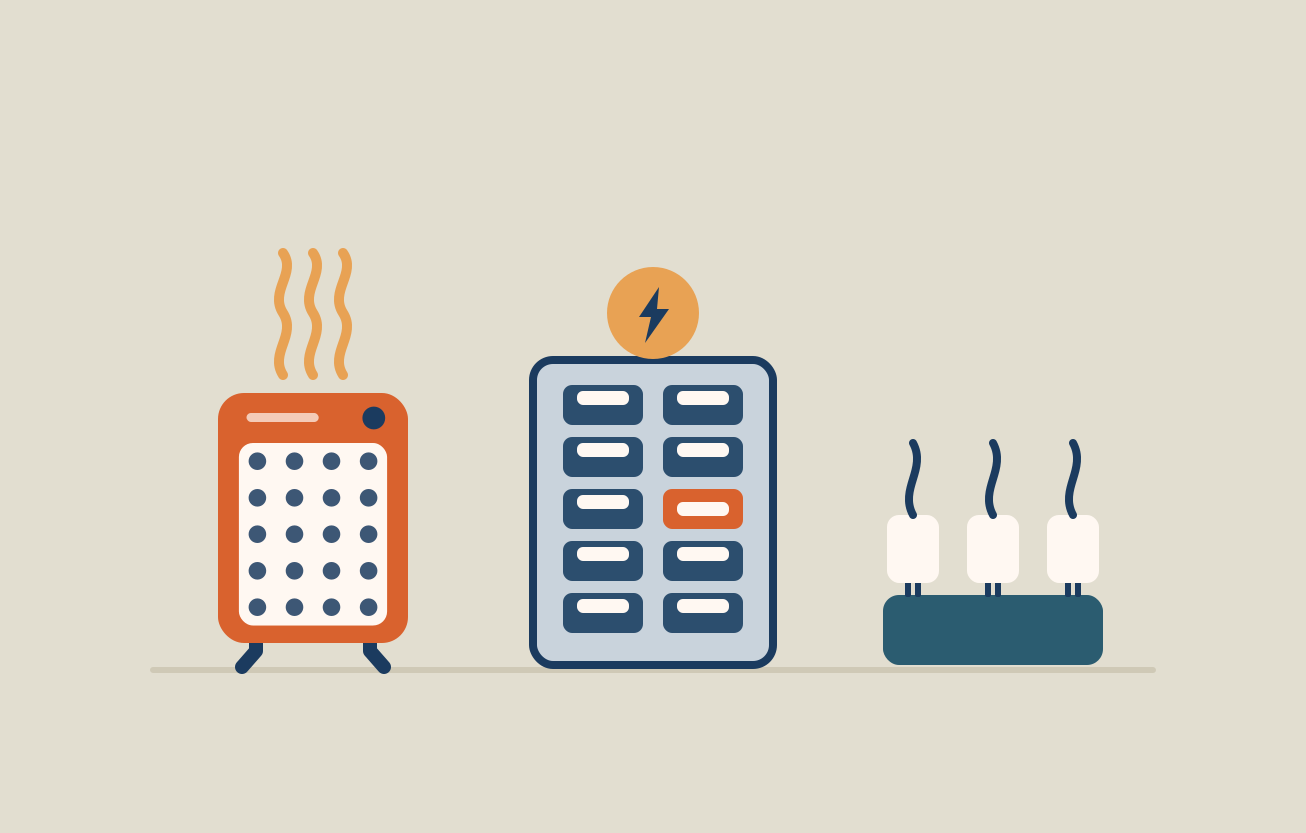
One of the most common reasons a space heater trips a circuit breaker is that the electrical circuit is carrying more load than it can safely handle. Space heaters draw a substantial amount of power, and when other appliances are running on the same circuit, their combined electricity demand can exceed the circuit's capacity.
For example, a typical 1,500-watt space heater draws approximately 12.5 amps on a 120-volt circuit. If you're interested in how different heater settings and wattages affect electricity consumption, see our guide to how much electricity a space heater uses. If it's plugged into a 15-amp circuit, that leaves relatively little capacity for other appliances. Running a microwave, vacuum cleaner, or another high-power device on the same circuit could push the total load beyond what the breaker is designed to handle.
When that happens, the circuit breaker trips and interrupts the power to prevent overheating and reduce the risk of an electrical fire.
It's also worth remembering that a circuit can supply multiple outlets throughout a room or even adjoining rooms. Just because your heater is plugged into a different outlet doesn't necessarily mean it's on a separate circuit.
If your space heater only trips the breaker when other appliances are running, an overloaded shared circuit is a likely explanation. However, repeated trips should never be ignored, even if the heater appears to work normally on its own. Stop using it until the cause has been identified. Have an electrician check the circuit if you're unsure what else is connected to it or whether it can safely handle the load.
How quickly the circuit breaker trips can offer useful clues about what's happening. A space heater that trips the breaker immediately may indicate a different problem from one that runs for several minutes before shutting off the power.
Here are a few common scenarios:
The distinction matters because not every breaker trip is caused by using too many appliances at once. A faulty heater or an electrical problem elsewhere in the circuit can also cause the breaker to shut off. If your heater switches off on its own without tripping the household breaker, the cause may be different. See our guide to why a space heater keeps turning off.
If your space heater keeps tripping the breaker even when other appliances aren't running, the problem may not be an overloaded circuit. A fault in the heater, household wiring, or circuit breaker itself could also be responsible.
Here are three possibilities worth considering:
It's important not to assume that the breaker itself is the problem just because it keeps switching off. It's doing so to protect the electrical circuit, and replacing it without identifying the underlying cause could create a serious safety risk.
If the heater trips the breaker repeatedly, stop using it and arrange for a qualified electrician to inspect the circuit. If you suspect the heater is faulty, have it checked by the manufacturer or an authorized repair professional before using it again.
Also, pay attention to warning signs such as a burning smell, unusual buzzing, visible damage, or a hot plug or outlet. These can indicate an electrical problem that needs immediate attention. For more on overheating plugs and outlets, see our guide to why a space heater plug gets hot.
If your space heater repeatedly trips the circuit breaker, the safest approach is to stop using it until you know what's causing the problem. A breaker that keeps shutting off is warning you that something in the electrical system needs attention.
Here's what to do:
The goal isn't simply to get the heater running again. It's to identify and address the reason the breaker tripped before using the heater again.
A space heater doesn't always need a dedicated circuit, but it may be a good option if the heater is regularly used alongside other high-power appliances.
A typical 1,500-watt space heater draws about 12.5 amps on a 120-volt circuit.
That's a substantial portion of a standard 15-amp circuit's capacity, leaving limited room for other electrical loads. If several appliances share the same circuit, the combined demand may cause the breaker to trip.
A dedicated circuit supplies power to the heater without sharing its capacity with other household appliances. This can help prevent overloads, provided the circuit is correctly sized and installed for the heater.
However, installing a dedicated circuit isn't automatically necessary or a solution to every breaker problem. The right setup depends on the heater's electrical requirements, the home's wiring, and the circuit's rating. Have a qualified electrician assess the installation and determine whether a dedicated circuit is appropriate.
If your breaker keeps tripping, don't simply assume a dedicated circuit will fix it. The underlying cause should be identified first.
If your space heater keeps tripping the breaker, don't ignore the warning or keep resetting it in the hope that it will stay on. An overloaded circuit is a common cause, but a faulty heater, damaged wiring, or a defective breaker could also be responsible.
Stop using the heater until the cause has been identified, and have a qualified electrician inspect the circuit if the breaker trips repeatedly.A dedicated circuit may help in some situations, but it's important to address the underlying problem first. The priority is making sure your heater and electrical system are safe before using them again.