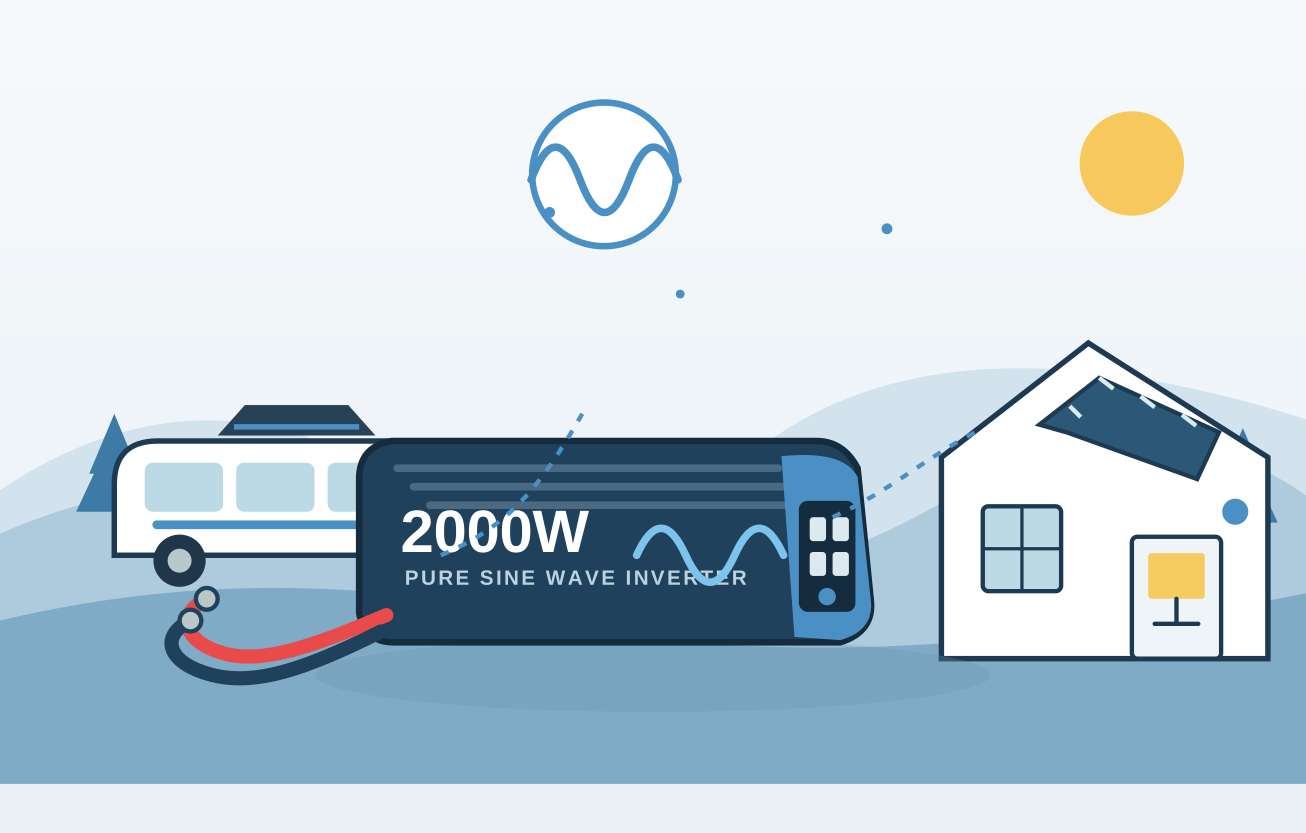
A good 2000W pure sine wave inverter can provide reliable AC power for an off-grid cabin, RV, boat, van, workshop, backup power system, or solar installation. But not every 2000 watt inverter performs the same way.
Continuous power, surge capacity, efficiency, standby consumption, battery voltage, protection features, cooling, and build quality can all make a significant difference.
This guide explains what to look for in a 2000W pure sine wave inverter, what a 2000W inverter can run, how much battery capacity you may need, and whether a 12V or 24V system is the better choice.
Best 2000W Pure Sine Wave Inverters
The best 2000W inverter depends on how you intend to use it. An RV installation has different requirements from a permanent off-grid solar system, while a backup-power application may place greater importance on transfer switching and automatic operation.
Best Overall: Renogy 2000W Pure Sine Wave Inverter
Renogy's 2000W pure sine wave inverter is designed for applications including RVs, off-grid systems, vehicles, and backup power. It is a strong choice for users looking for a combination of continuous power, pure sine wave output, protection features, and established manufacturer support.
Best for: RVs, vans, off-grid systems, and general-purpose battery-powered AC power.
Best Value: VEVOR 2000W Pure Sine Wave Inverter
A lower-cost 2000W pure sine wave inverter can make sense when the priority is obtaining clean AC power without paying for premium features that may not be necessary for a simple installation.
VEVOR offers several inverter models aimed at recreational, vehicle, and off-grid applications.
Best for: Budget-conscious users and straightforward off-grid or vehicle installations.
Best for European Buyers: Green Cell 2000W Pure Sine Wave Inverter
Green Cell offers pure sine wave inverters designed to convert battery power into household-style AC electricity. Its products are particularly relevant to European buyers looking for a 2000W inverter for vehicles, backup power, camping, or off-grid applications.
Best for: European buyers looking for a relatively compact 2000W pure sine wave inverter.
What Is a 2000W Pure Sine Wave Inverter?
A 2000W pure sine wave inverter converts direct current (DC) electricity from a battery or other DC power source into alternating current (AC) electricity that can be used by conventional household appliances and electrical equipment.
The term 2000W refers primarily to the inverter's continuous power rating. A quality inverter may also have a higher short-term surge rating to accommodate appliances that require additional power when starting.
Pure sine wave describes the shape and quality of the AC output. Pure sine wave electricity is designed to closely reproduce the type of AC power supplied by the electrical grid. This makes it suitable for sensitive electronics, motors, compressors, chargers, appliances, and equipment that may not operate correctly with lower-quality modified sine wave output.
What Can a 2000W Inverter Run?
A 2000W inverter can supply substantial AC power, but the exact appliances it can operate depend on their running wattage, starting or surge requirements, and whether several devices are being used simultaneously.
Examples of equipment that may be suitable for a 2000W inverter include:
- Refrigerators and freezers
- Microwaves
- Televisions
- Laptops and desktop computers
- Battery chargers
- Power tools
- Lights
- Small kitchen appliances
- Fans
- Small pumps
- Networking equipment
The important point is that 2000W does not mean every combination of appliances can be run at the same time.
You need to add the running wattage of the equipment you intend to operate and leave sufficient capacity for startup surges.
2000W Continuous Power vs Surge Power
One of the most important specifications when choosing a 2000W inverter is the difference between continuous power and surge power.
Continuous power is the amount of power the inverter can supply for an extended period under its specified operating conditions. A 2000W inverter should therefore be evaluated based on whether it can genuinely deliver approximately 2000W continuously, rather than simply advertising a 2000W maximum figure.
Surge power is the additional short-term power available when equipment starts. Refrigerators, freezers, pumps, compressors, power tools, and some other motor-driven appliances can require significantly more power during startup than they use while operating normally.
For these applications, surge capacity can be just as important as the headline 2000W rating.
Pure Sine Wave vs Modified Sine Wave
Pure sine wave and modified sine wave are two different types of inverter output.
A pure sine wave inverter produces a smooth AC waveform similar to utility electricity. This is generally the better choice for sensitive electronics, induction motors, compressors, audio equipment, medical equipment, and appliances with sophisticated power supplies.
A modified sine wave inverter uses a simpler approximation of an AC waveform. These inverters can be less expensive, but some equipment may produce additional noise, run less efficiently, become hotter, or fail to operate correctly.
For a 2000W off-grid system where compatibility and reliable operation matter, a pure sine wave inverter is generally the safer choice.
12V vs 24V: Which Is Better for a 2000W Inverter?
A 2000W inverter can be used with either a 12V or 24V battery system, depending on the inverter and the rest of the installation.
The major difference is the amount of DC current required. At the same power level, a 12V system requires approximately twice the current of a 24V system, before accounting for inverter efficiency and other losses.
This makes 24V systems attractive for larger off-grid installations. Higher system voltage can reduce the current flowing through the DC wiring, which can make cable sizing and system design more manageable.
A 12V inverter can still be an excellent choice for an RV, van, boat, or smaller battery system where 12V equipment is already being used.
How Big a Battery Do You Need for a 2000W Inverter?
The battery required for a 2000W inverter depends on how much power you need and how long you want to run your equipment.
Running a full 2000W load continuously places a substantial demand on a battery. The actual DC power drawn will also be higher than 2000W because an inverter is not 100% efficient.
For example, at a 12V battery voltage, a 2000W AC load can require well over 160 amps of DC current once inverter losses are included. At 24V, the corresponding current is roughly half as high.
This is why battery capacity, battery chemistry, maximum discharge current, wiring, fusing, and inverter efficiency all need to be considered together.
How Long Will a 2000W Inverter Run?
A 2000W inverter does not determine how long your system will operate by itself. Runtime depends primarily on battery capacity and the actual load connected to the inverter.
A small load such as a laptop or LED lighting system may run for many hours, while a continuous 2000W load can drain a battery very quickly.
Runtime is affected by:
- Battery capacity
- Battery voltage
- Battery chemistry
- Depth of discharge
- Inverter efficiency
- Inverter idle consumption
- AC load
- Temperature
What to Look for in a 2000W Pure Sine Wave Inverter
The headline wattage is only one specification to consider. The following features can have a major impact on performance and reliability.
Continuous Power Rating
Look for a genuine continuous output rating rather than relying solely on the manufacturer's maximum or peak figure.
Surge Capacity
If you plan to operate refrigerators, pumps, compressors, or power tools, check the inverter's surge rating and the duration for which it can sustain that output.
Efficiency
Higher inverter efficiency means less energy is lost as heat and more of the battery's stored energy reaches your appliances. Efficiency can vary significantly depending on the load.
Idle Power Consumption
An inverter consumes some power even when the AC load is small. Low standby consumption is particularly important for solar and off-grid systems where battery energy is limited.
Low-Voltage Protection
Low-voltage protection helps prevent excessive battery discharge and can protect the battery system from potentially damaging operating conditions.
Overload and Short-Circuit Protection
A good inverter should incorporate protection against overloads, short circuits, overheating, and other abnormal operating conditions.
Cooling and Thermal Management
At high loads, an inverter generates heat. Effective cooling and thermal protection are therefore important, particularly when the inverter will operate close to its maximum rated output.
Remote Control
A remote on/off switch can be useful when the inverter is installed in an inaccessible location such as a storage compartment, electrical cabinet, or enclosed off-grid installation.
Where Are 2000W Pure Sine Wave Inverters Used?
2000W pure sine wave inverters are commonly used in situations where conventional grid electricity is unavailable or where battery power needs to be converted into usable AC electricity.
Common applications include:
- Off-grid homes and cabins
- RV and camper electrical systems
- Vans and mobile workshops
- Boats
- Solar power systems
- Emergency backup power
- Remote work sites
- Camping and outdoor power systems
Is a 2000W Inverter Enough for an Off-Grid System?
For many small and medium-sized off-grid applications, a 2000W inverter can be a useful size. It can provide enough AC power for a range of everyday appliances without requiring the larger battery bank and higher DC current associated with a much larger inverter.
However, the correct inverter size depends on the maximum simultaneous load and the startup requirements of the equipment you intend to use.
If you regularly need to run several high-power appliances at once, a 3000W or larger inverter may be more appropriate. If your loads are modest, a smaller inverter can reduce cost and standby energy consumption.
How to Choose the Best 2000W Pure Sine Wave Inverter
The best 2000W pure sine wave inverter is not necessarily the one with the highest advertised peak wattage or the lowest price. The right choice depends on your battery system, appliances, installation environment, and expected usage.
Before buying, check these specifications:
- 2000W continuous output
- Surge or peak power rating
- 12V or 24V battery compatibility
- Pure sine wave output
- Efficiency at typical loads
- Idle or standby consumption
- Low-voltage cutoff
- Overload protection
- Over-temperature protection
- Short-circuit protection
- Cooling system
- AC outlet configuration
- Remote control options
- Warranty and manufacturer support
Frequently Asked Questions
What can a 2000W pure sine wave inverter run?
A 2000W pure sine wave inverter can run many household and off-grid appliances, including refrigerators, televisions, computers, chargers, lights, small kitchen appliances, power tools, fans, and some pumps. The combined running wattage and startup requirements of the appliances must remain within the inverter's limits.
Is a 2000W pure sine wave inverter enough for an RV?
A 2000W pure sine wave inverter can be a suitable size for many RV electrical systems. It can provide AC power for appliances such as refrigerators, televisions, computers, chargers, and some kitchen equipment. Whether it is sufficient depends on the appliances you intend to operate simultaneously.
What size battery is needed for a 2000W inverter?
The required battery size depends on the load and desired runtime. A 2000W load places a substantial demand on a battery, particularly on a 12V system. Battery capacity, maximum discharge current, chemistry, inverter efficiency, and allowable depth of discharge should all be considered when designing the system.
Is a pure sine wave inverter better than a modified sine wave inverter?
Pure sine wave inverters generally provide better compatibility with sensitive electronics, motors, compressors, chargers, and appliances. Modified sine wave inverters can cost less, but some equipment may operate less efficiently, produce additional noise, or fail to work correctly with their output.
Should I choose a 12V or 24V 2000W inverter?
A 12V inverter can make sense for smaller vehicle, RV, and marine systems, while 24V can be advantageous for larger off-grid installations because it requires lower DC current at the same power level. The correct choice depends on the voltage of the battery bank and the rest of the electrical system.
Can a 2000W inverter run a refrigerator?
Yes, a 2000W pure sine wave inverter can run many refrigerators, provided it has sufficient surge capacity for the compressor's startup demand. The refrigerator's running and starting wattage should be checked before choosing the inverter.
Final Thoughts
A 2000W pure sine wave inverter can be an excellent middle ground for off-grid power, RVs, vans, backup systems, and smaller solar installations. It provides enough capacity for many everyday appliances while remaining more manageable than a much larger inverter system.
The most important factors are not simply the advertised 2000W rating. Look closely at continuous output, surge capacity, efficiency, idle consumption, battery voltage, protection features, and compatibility with the appliances you intend to run.
For most applications where reliable and broadly compatible AC power is important, choosing a quality pure sine wave inverter is worth the additional cost over a basic modified sine wave model.