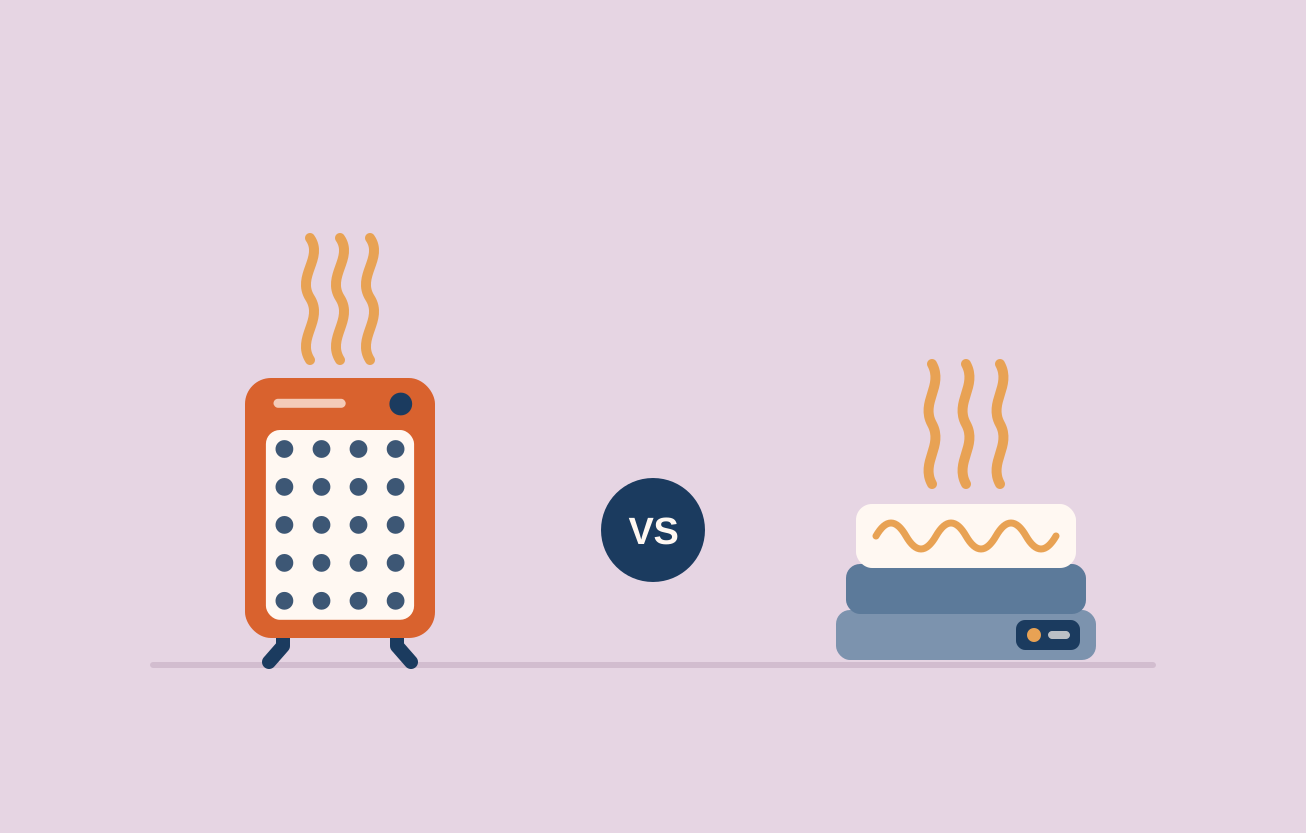
When comparing an electric blanket vs a space heater, which costs less to run? In most cases, an electric blanket uses significantly less electricity because it heats your body directly rather than warming the air in an entire room. If you're looking for a way to stay warm, reduce energy consumption, and lower your heating costs, an electric blanket could be a more economical choice.
However, the best option depends on how you use it. An electric blanket is ideal for personal warmth while sitting on the sofa, working at a desk, or getting into bed. A space heater, on the other hand, is better when you need to warm a room or keep several people comfortable.
In this guide, we'll compare electric blanket and space heater electricity consumption, running costs, and environmental impact. We'll look at how much electricity each uses, which option is more sustainable, and when it makes sense to choose one over the other. That way, you can make a more informed decision about staying warm without wasting energy.
The biggest difference between an electric blanket and a space heater is how each one delivers heat. An electric blanket provides targeted warmth by heating your body directly, while a space heater warms the surrounding air to increase the temperature of a room. This difference has a significant effect on how much electricity each appliance needs.
An electric blanket uses thin heating wires or elements woven into its fabric to generate warmth. When switched on, these elements heat the blanket's surface, providing direct warmth to the person underneath or sitting with it.
Because the heat is concentrated around your body rather than being used to warm an entire room, electric blankets generally require relatively little electricity. Most models use approximately 50–150 watts, although actual consumption varies depending on the blanket's size, temperature setting, and design.
Electric blankets are particularly useful when you're sitting on the sofa, working at a desk, or warming your bed before going to sleep. Some models offer adjustable temperature settings and automatic shut-off features, allowing you to control how much heat you use.
A space heater works differently. Instead of heating your body directly, it uses electricity to warm the air in a room. Depending on the model, it may use a fan to circulate warm air or radiate heat towards nearby objects and people.
Most portable electric space heaters operate at approximately 750–1,500 watts, with many conventional models using 1,500 watts at their highest setting.
Space heaters are useful when you need to warm a cold room, home office, or living area without turning up your central heating. However, because they are designed to heat a larger space, they generally consume considerably more electricity than an electric blanket.
The figures above are typical examples rather than fixed specifications. Always check the manufacturer's power rating, as consumption varies between products and settings.
If you're trying to reduce your electricity bill, an electric blanket is generally much cheaper to run than a space heater. The reason is simple: electric blankets typically use a fraction of the power required by portable heaters.
To understand the difference, let's compare a typical 100-watt electric blanket with a 1,500-watt space heater.
Electricity consumption is measured in kilowatt-hours (kWh). To calculate how much electricity an appliance uses, divide its wattage by 1,000 and multiply the result by the number of hours it operates.
For example:
- A 100-watt electric blanket uses 0.1 kWh per hour.
- A 1,500-watt space heater uses 1.5 kWh per hour.
Here's how their electricity consumption compares over different periods:
Based on these examples, the space heater uses 15 times as much electricity as the electric blanket when both operate continuously at their rated power.
Let's assume an electricity price of €0.25 per kWh. Your actual electricity tariff may be higher or lower depending on your location and energy provider.
At these rates, running a 100-watt electric blanket for eight hours costs approximately €0.20, compared with €3.00 for a 1,500-watt space heater.
That's a potential difference of €84 over 30 days if both appliances operate for eight hours every day at their full rated power.
Not necessarily in every real-world situation. The figures above assume both appliances operate continuously at their full rated wattage. Actual electricity consumption can vary.
For example, some space heaters have thermostats that switch the heating element on and off as the room reaches the selected temperature. Electric blankets may also use less power on lower temperature settings or cycle their heating elements to maintain warmth.
Other factors include:
- Temperature settings: Higher settings generally require more energy.
- Thermostats: Space heaters may switch off temporarily once the room reaches the desired temperature.
- Room insulation: A poorly insulated room loses heat more quickly, potentially making a space heater work harder.
- Product design: Different blankets and heaters have different power ratings and control systems.
If you want to understand your potential space heating costs in more detail, see our guide on how much it costs to run a space heater 24/7.
The bottom line: An electric blanket will generally cost considerably less to operate when you're trying to keep one person warm. A space heater uses more electricity because it has the larger job of heating the surrounding air. For personal warmth, targeted heating can offer substantial electricity savings.
When comparing an electric blanket vs a space heater, electricity consumption is one of the most important factors to consider from an environmental perspective.
Because electric blankets generally use considerably less electricity than space heaters, they can be a more sustainable way to stay warm when you only need personal heating. Rather than using energy to warm the air throughout a room, an electric blanket directs heat exactly where it's needed.
However, the environmental impact of both appliances goes beyond how much electricity they consume.
Most of the environmental impact associated with using an electric blanket or space heater comes from the electricity required to operate it. The carbon emissions associated with that electricity depend on your local energy mix.
If your electricity comes partly or entirely from fossil fuels, using less electricity can help reduce the emissions associated with your energy consumption. If your home is powered by renewable electricity, the operational carbon footprint may be considerably lower.
As we saw in the previous section, a typical 100-watt electric blanket uses around 0.8 kWh over eight hours, compared with 12 kWh for a 1,500-watt space heater operating continuously.
That difference illustrates why targeted heating can be a more energy-efficient approach to staying warm. When you don't need to heat an entire room, using an electric blanket can avoid unnecessary electricity consumption.
Electricity isn't the only environmental consideration. Both electric blankets and space heaters require raw materials, manufacturing, packaging, and transportation before they reach your home.
Electric blankets contain textiles, electrical wiring, and electronic controls, while space heaters typically contain metal, plastic, heating elements, and electrical components.
How long a product lasts also matters. A well-made appliance that provides years of reliable use may have a lower environmental impact over its lifetime than a cheaper product that needs frequent replacement.
When choosing either option, consider:
- Durability: Look for products made with reliable materials and backed by a reputable manufacturer.
- Repairability: Consider whether replacement parts or repairs are available.
- Energy consumption: Check the actual wattage and energy-saving features rather than relying on marketing claims.
- Product lifespan: Choose something suitable for your needs that you can use for several years.
- Responsible disposal: Electrical appliances and heated textiles should be disposed of through appropriate local recycling or waste collection schemes.
In many situations, yes. If you're working at a desk, relaxing on the sofa, or keeping warm in bed, heating your immediate surroundings or using an electric blanket can reduce the need to heat an entire room.
This approach is particularly useful if you spend much of your time in one place and don't need every room in your home to be warm.
However, an electric blanket isn't a complete replacement for home heating. Room temperatures still matter for comfort, moisture control, and protecting your home from problems associated with excessive cold.
The most sustainable heating choice is often the one that provides the warmth you actually need while avoiding unnecessary energy consumption. For personal warmth, an electric blanket can be an excellent option. When you need to heat a shared space, a suitably sized and efficient space heater may be more practical.
Although electric blankets generally use less electricity, they aren't always the best choice for every situation. The right option depends on whether you want to warm yourself or increase the temperature of an entire room.
Understanding the difference can help you avoid unnecessary energy consumption while staying comfortable.
An electric blanket is often the more economical option when you only need to keep yourself warm. Instead of heating the surrounding air, it provides direct warmth wherever you use it.
An electric blanket or heated throw may be particularly useful when:
- Working from home: Keep warm at your desk without running a space heater throughout the day.
- Relaxing on the sofa: A heated throw can provide personal warmth while watching television or reading.
- Warming your bed: An electric blanket or heated mattress pad can warm your bedding before you get into bed. Follow the manufacturer's instructions for use, including whether it is suitable for overnight operation.
- Reducing heating costs: If you're comfortable keeping the room slightly cooler, targeted heating may reduce the need to turn up your central heating.
Electric blankets are particularly practical for people who spend several hours in one place and don't need the entire room to be heated.
A space heater makes more sense when you need to warm the air around you rather than just your body.
It may be the better option when:
- Heating a cold home office: A space heater can make a room more comfortable when you're working or studying.
- Warming a shared space: It can provide heat for several people using the same room.
- Taking the chill out of a room: A space heater can help warm a room that feels uncomfortable, particularly during colder weather.
- Providing supplementary heating: It can be useful when your central heating doesn't adequately warm a particular room.
If you decide a space heater is more suitable, choosing an appropriately sized model with a thermostat and useful energy-saving features can help manage electricity consumption. See our guide to the most energy-efficient space heaters for more information.
Yes, you can use both, provided each appliance is used according to its manufacturer's safety instructions.
For example, you might use a space heater to bring a cold room to a comfortable temperature, then switch it off and use an electric blanket or heated throw to maintain personal warmth.
This approach can be more energy-conscious than continuously running a space heater, particularly if you only need additional warmth while sitting or relaxing.
However, always follow the safety instructions for both appliances. Keep space heaters away from bedding, curtains, and other combustible materials, and never cover a heater or use an electric blanket in a way that the manufacturer does not permit.
The bottom line: Choose an electric blanket when you want to warm one person, and a space heater when you need to warm a room. Matching the appliance to your actual heating needs is one of the simplest ways to avoid wasting electricity.
If you've decided that an electric blanket is the better option for your needs, choosing the right model can make a difference to your comfort, electricity consumption, and long-term value.
Although most electric blankets use relatively little electricity, not all models offer the same features, quality, or durability. A well-designed blanket with adjustable heat settings and reliable safety features can provide comfortable warmth without unnecessary energy use.
Here are some important things to consider before buying.
One of the most useful features of an electric blanket is adjustable temperature control.
Rather than operating at maximum power all the time, you can select a lower heat setting once you're comfortable. This can help avoid unnecessary energy consumption while providing enough warmth for your needs.
Look for models with several heat settings so you can adjust the temperature to suit different conditions.
Safety should be a priority when buying any electrically heated bedding product.
Look for an electric blanket with features such as:
- Automatic shut-off: Switches the blanket off after a preset period, depending on the model.
- Overheat protection: Helps prevent excessive temperatures during operation.
- Temperature controls: Allow you to adjust the heat to a comfortable level.
- Appropriate safety certification: Check that the product meets the applicable electrical safety requirements in your country.
Always read the manufacturer's instructions before use. Check whether the blanket is designed for overnight use, and never use one with damaged wiring, controls, or fabric.
Electric blankets come in different designs, and choosing the right type depends on how you plan to use them.
Heated throws are designed to provide warmth while you're sitting on a sofa, relaxing, or working at a desk. They're generally portable and can be moved around the home.
Electric mattress pads sit on top of or underneath the mattress, depending on the manufacturer's instructions. They provide warmth across the sleeping surface and are designed specifically for use in bed.
Both options can provide targeted warmth, but it's important to choose a product designed for your intended use.
From a sustainability perspective, buying a durable electric blanket is often a better decision than choosing the cheapest available model.
Look for reputable manufacturers, clear warranty information, washable materials where appropriate, and replacement controls or parts if available.
A product that lasts several years can offer better long-term value and help reduce unnecessary electronic and textile waste.
Before purchasing, also check the manufacturer's cleaning instructions. Some electric blankets have removable controllers and are machine washable, while others require different care.
Before buying, check the product's wattage rating. This gives you an indication of how much electricity it could consume when operating at full power.
For example, a 100-watt electric blanket uses approximately 0.1 kWh per hour at its rated power. A lower-wattage model may use less electricity, but comfort, blanket size, construction, and temperature settings also matter.
Don't choose a blanket based on wattage alone. The best option is one that provides sufficient warmth, has appropriate safety features, and is built to last.
So, is an electric blanket cheaper to run than a space heater? In most cases, yes. An electric blanket generally uses significantly less electricity because it heats your body directly rather than warming the air throughout an entire room.
For example, a typical 100-watt electric blanket uses around 0.8 kWh over eight hours, compared with 12 kWh for a 1,500-watt space heater running continuously at full power. This can make an electric blanket a much more economical option if you simply want to stay warm while working, relaxing, or getting into bed.
However, the two appliances serve different purposes. An electric blanket is ideal for personal warmth, while a space heater is more suitable when you need to heat a cold room or keep several people comfortable.
From a sustainability perspective, the best approach is to avoid heating spaces unnecessarily. If you only need to keep yourself warm, an electric blanket can be a practical way to reduce electricity consumption without sacrificing comfort.
Ultimately, choosing targeted heating whenever possible can help lower your energy use, reduce heating costs, and make your home a little more energy efficient.