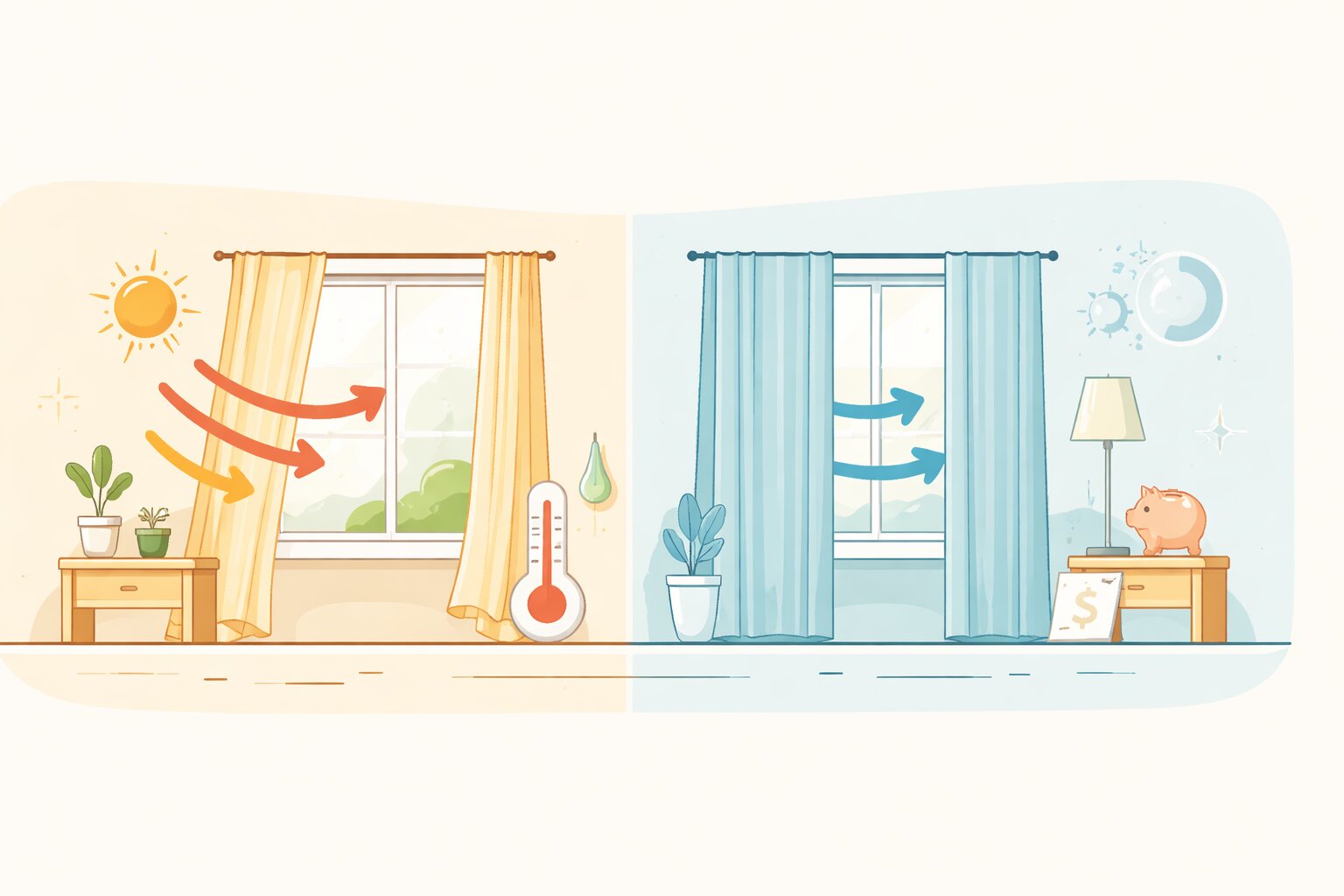
If you’ve ever looked at your energy bills and wondered why your home feels like an icebox in winter or an oven in summer, you’re not alone. One of the biggest culprits isn’t your heating or cooling system—it’s your windows. Windows can account for up to 30% of a home’s heat loss or gain, meaning the right window treatments can make a huge impact on comfort and energy efficiency.
This is where energy-efficient curtains come in. Unlike regular drapes, these curtains are designed to insulate your windows, block sunlight, and even reduce outside noise. Choosing the right material, thickness, and installation style can help maintain a consistent indoor temperature year-round and lower your energy bills.
After researching different options, one product that consistently stands out for both quality and performance is the Pony Dance 100% Blackout Curtains. These curtains feature:
- Double-layer thermal insulation: Helps keep your room cool in summer and warm in winter.
- 100% blackout fabric: Blocks sunlight completely for better sleep and privacy.
- Noise reduction: Minimizes outside sounds for a quieter home.
- Easy installation: Grommet tops make them simple to hang on standard rods.
Customers rave about their durability, thickness, and energy-saving benefits, making them ideal for bedrooms, living rooms, and nurseries. Based on research and user feedback, these curtains are a smart choice for anyone looking to cut energy costs and boost home comfort.
When I first started looking into ways to save on my energy bills, I noticed that no matter how often I cranked the thermostat, my living room would still feel drafty. That’s when I realized my windows were the weak point.
Energy-efficient curtains act like thermal barriers, reducing heat transfer through your windows. In winter, they trap warmth inside; in summer, they block heat from coming in. This means my heating and cooling systems work less, which saves money and makes my home more comfortable.
Some benefits I’ve noticed since upgrading to thermal curtains:
- Lower energy bills
I’ve seen roughly a 20–30% reduction in heating and cooling costs since installing thermal curtains. This aligns with how thermal curtains slow heat transfer through windows, reducing HVAC demand and overall energy use. They are also discussed in practical energy terms by Endesa’s energy blog.
- Better temperature regulation
My rooms stay noticeably more comfortable during heatwaves and cold snaps, with fewer temperature swings. Insulated curtains help block radiant heat in summer and reduce heat loss in winter, improving year-round thermal stability, as explained in thermal curtain case studies.
- Noise reduction and improved privacy
Living on a busy street, I’ve noticed a clear reduction in outside noise. While not full soundproofing, thicker thermal fabrics absorb and dampen sound waves, which is noted in thermal curtain research.
- Light control
Thermal blackout curtains are excellent for sleep quality and media rooms, blocking light while also reducing heat transfer through windows. Their dual function is highlighted in thermal blackout curtain guides.

Honestly, it’s amazing how something as simple as the right curtains can transform a home.
The key to energy performance lies in fabric, structure, and installation. Here’s what I’ve learned:
Curtains with insulating layers, dense weaves, or thermal backings trap air and block heat transfer — fabrics like heavy cotton, wool, polyester blends, and velvet are excellent options for this. Dense materials create a barrier that slows heat loss in winter and reduces heat gain in summer by minimizing conduction and convection through the window area. For a touch of luxury with strong performance, I personally prefer velvet in my living room because its plush texture helps insulate while also adding a rich look.
- Learn more about thermal curtain fabrics and energy-saving performance
- See a guide on best fabrics for insulated curtains
- Overview of dense fabrics like velvet for light and thermal insulation
Blackout curtains are a game‑changer. They are thick, opaque, and block almost all light — and they also help control heat transfer through your windows. Installing them in a bedroom can make the room cooler in the summer and warmer in the winter by adding an insulating barrier that reduces heat gain and heat loss.
For more on their benefits:
- How blackout curtains block light and improve insulation
- Do blackout curtains help keep heat out?
- Blackout curtain benefits for energy efficiency and temperature control
I like to combine thermal curtains with sheer curtains because the multiple fabric layers trap air, improving insulation and helping regulate indoor temperature without blocking all the natural light. Layered setups also allow flexibility — you can enjoy soft daylight during the day while maintaining privacy and energy efficiency when needed. According to window design experts, layering curtains increases the overall insulation value of your windows, and energy-focused guides highlight how the trapped air between layers can reduce heat transfer effectively. Plus, combining heavy drapes with light sheers is a stylish solution, giving both performance and aesthetic appeal.
One mistake I made initially was getting curtains that were too short. For energy efficiency, the curtains should cover the entire window frame and reach the floor. Overlapping the sides also helps seal drafts.
There are several types of energy-efficient curtains and window treatments, each designed to solve a slightly different problem. Below are my favorite options based on insulation performance, comfort, and real-world use.
These heavy, multi-layer curtains trap air to reduce heat loss in winter and block heat in summer. I use them in my main living areas, and the difference is noticeable. Learn more.
Best for: Year-round insulation, living rooms, and shared spaces.
Blackout curtains are ideal for bedrooms or media rooms because they block almost all sunlight and help reduce heat gain from strong sun exposure, which can make a room cooler and more comfortable. I personally love them for sleeping in on weekends — they block light and heat simultaneously. Learn more
Best for: Bedrooms, south-facing windows, or areas with strong sunlight.
Although not technically curtains, cellular or honeycomb shades deserve a mention because their unique honeycomb design traps air pockets that create a strong insulating barrier, helping keep your rooms warmer in winter and cooler in summer. I installed a few in my office, and they make a huge difference in comfort. Learn more about how honeycomb shades improve insulation and energy efficiency.
Best for: Modern interiors with a focus on energy efficiency.
Layering sheer curtains with thermal drapes or cellular shades provides both style and insulation. I highly recommend this if you want flexibility in light control and energy savings. Learn more.
Best for: Whole-home comfort and aesthetic flexibility.
Smart curtains that automatically open and close based on sunlight or time of day are a game-changer for comfort and energy efficiency. You can program them to close during hot summer afternoons to keep rooms cool, then open on bright winter mornings to capture natural heat and reduce heating costs. These systems integrate with smart home platforms and sensors, adjusting on their own without constant manual input. As explained in this guide on smart curtains and automated window treatments, this type of automation can significantly improve indoor comfort while helping lower energy use year-round.
- Hang curtains close to the window frame to reduce drafts and block heat loss by limiting airflow around the glass, a method recommended in the U.S. Department of Energy’s guide to energy-efficient window coverings.
- Ensure curtains reach the floor so warm air doesn’t escape from the bottom and cold air doesn’t pool near the window, another best practice outlined by Energy.gov.
- Overlap curtain panels beyond the sides of the window frame to create a tighter insulation seal and block side drafts, a technique commonly advised in home-energy efficiency resources like Energy Saver by the DOE.
- Use light-colored or reflective linings in sunny rooms to reflect solar heat away from the window and keep interiors cooler, a tip frequently shared in interior-design and window-treatment guides such as Designer Living’s curtain insulation tips.
Based on my experience and research:
- Heating loss can be reduced by 25–30% in winter. (Freshine Life)
- Solar heat gain in summer can be significantly cut. (Designer Living)
- My HVAC system now runs less often, which also reduces noise and wear.
Here’s my quick checklist before buying energy-efficient curtains:
- Heavy, dense fabrics like velvet, wool, or polyester blends
- Thermal or blackout linings
- Curtains that cover windows fully
- Multi-layer treatments or shades for extra insulation
- Smart automation if possible
For me, installing energy-efficient curtains was one of the simplest, most effective home upgrades I’ve ever done. They improve comfort, reduce energy bills, and even enhance the look of a room. Whether you’re retrofitting an old home or upgrading your interiors, the right curtains are a smart investment that pays off in comfort, style, and savings.