How Does a Generator Produce Electricity? | A Simple Guide to How Generators Work
How does a generator actually produce electricity? This guide breaks down what happens inside a generator, from the engine and alternator to electromagnetic induction, and explains how that process delivers usable power when the grid goes down.
A generator doesn't actually make electricity from nothing. It converts another form of energy — usually mechanical energy from an engine or turbine — into electrical energy.
That sounds simple, but what is actually happening inside the machine?
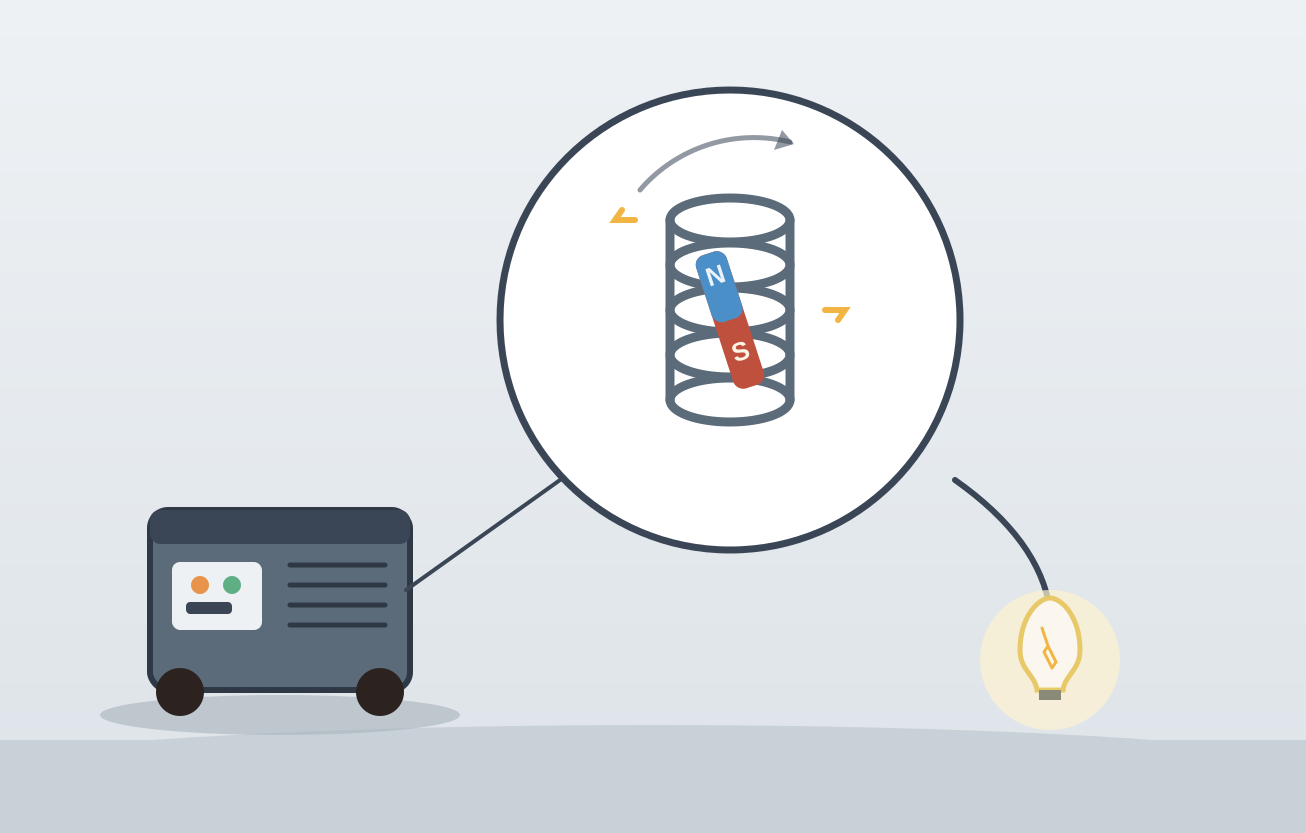
A gasoline or diesel generator burns fuel to turn an engine. The engine spins a shaft connected to an alternator, where a changing magnetic field induces an electrical voltage in coils of wire.
The basic chain is:
Fuel → engine → rotation → magnetic field → electrical current
So how does a generator turn spinning motion into electricity?
How a generator works
Electricity begins with
motion.
A generator takes mechanical energy and turns it into
electrical energy. In a conventional fuel generator,
an engine creates the rotation and an alternator converts
that rotation into electricity.
THE CORE PRINCIPLE
Mechanical energy
→ electromagnetic induction
→ electrical energy
01
The essential idea
The engine supplies the
motion.
The alternator supplies the
electricity.
That distinction is the key to understanding the whole
machine. Fuel powers the engine, the engine turns a shaft,
and the rotating shaft drives the alternator.
Energy conversion
Fuel → motion → electricity
The generator does not create energy from nothing.
It converts energy from one form into another.
The process
From stored energy to usable power.
Five stages
one continuous chain
01 / FUEL
Energy is stored in
the fuel.
Fuel stores chemical energy. Combustion releases that
energy inside the engine.
chemical energy
02 / ENGINE
Combustion creates
movement.
Expanding gases push the pistons. Their movement is
transferred to the crankshaft.
heat → motion
03 / SHAFT
The crankshaft creates
rotation.
The crankshaft turns piston movement into continuous
rotation and drives the alternator.
mechanical energy
04 / ALTERNATOR
Rotation creates a
changing magnetic field.
The rotating magnetic field moves relative to coils
of wire, inducing an electrical voltage.
electromagnetic induction
05 / OUTPUT
The result is
electrical power.
The electrical output is regulated and delivered to
the connected load.
electrical energy
Quick summary
The whole process,
in a nutshell.
A generator changes energy from one form into another.
The four stages below show the energy transformation
behind the physical process explained above.
01
Chemical
Energy stored in the fuel.
02
Thermal
Combustion releases heat and expanding gases.
03
Mechanical
The engine converts that force into rotation.
04
Electrical
The alternator converts rotation into electrical energy.
Inside the machine
What actually happens inside a generator?
Engine creates motion
alternator converts it
engine
crankshaft / shaft
alternator
1
The engine creates the motion.
Fuel combustion creates pressure that moves the
pistons. The crankshaft converts that movement
into rotation.
2
The rotor carries the magnetic field.
The rotating shaft drives the rotor inside the
alternator. Its magnetic field moves relative to
the stationary stator windings.
3
Electromagnetic induction creates voltage.
As the magnetic field changes relative to the
stator windings, it induces an electrical voltage
in the coils. When a circuit is connected, current
can flow through the load.
4
The output is regulated.
Voltage-regulation and control systems help keep
the electrical output within the range required
by the connected equipment.
Keep these separate
Different parts. Different jobs.
↻
The engine
Creates mechanical rotation by converting energy
released from the fuel into motion.
◉
The alternator
Converts mechanical rotation into electrical energy
through electromagnetic induction.
+
The output
Carries the resulting electricity to the connected
electrical load.
The bottom line
A generator does not
make energy.
It changes the form that energy takes.
In a conventional fuel generator, the engine provides
the mechanical rotation and the alternator converts
that rotation into electricity.
01What Actually Happens Inside a Generator?
A conventional fuel generator has two main jobs.
First, the engine supplies mechanical energy. Fuel is converted into heat through combustion, and the engine turns that energy into mechanical rotation. In a gasoline generator, combustion drives pistons, which turn a crankshaft.
Second, the alternator converts that rotation into electrical energy. The crankshaft turns the alternator's rotor. As the rotor's magnetic field rotates past the stationary windings in the stator, the magnetic flux through those windings continually changes. That changing flux induces a voltage in the conductors.
This is electromagnetic induction — the principle described by Faraday's law. OpenStax explains the relationship as ε = −N dΦ/dt, meaning that an electromotive force is induced when magnetic flux through a circuit changes.
The U.S. Energy Information Administration similarly describes electromagnetic generators as machines that convert mechanical or kinetic energy into electricity.
So the simplest way to think about a conventional generator is:
fuel → engine → rotation → rotating magnetic field → induced voltage → electricity
The fuel does not become electricity directly. The engine provides the mechanical input; the electromagnetic machine performs the actual electrical conversion.
02How Does Spinning Something Make Electricity?
This is the part that can seem almost magical.
Imagine a loop of copper wire sitting inside a magnetic field. If nothing changes, there is no continuously induced voltage.
Now change the magnetic flux passing through that loop — for example, by rotating the magnetic field relative to the wire.
As the magnetic flux changes, a voltage is induced in the conductor. Keep the motion going, and the voltage continues to be generated.
Inside a typical generator, the rotor and stator work together to turn mechanical rotation into electrical output.
The rotor
The rotor spins.
Depending on the generator design, it carries an electromagnet or permanent magnets. As it rotates, its magnetic field moves relative to the stationary windings.
01
N
S
↻
ROTOR
THE MOVING PART
The rotor spins.
Depending on the generator design, it carries an electromagnet
or permanent magnets. As it rotates, its magnetic field moves
relative to the stationary windings.
THE STATORStationary component / electrical output
02
The stator stays still.
It does not rotate.
The stator contains coils of conductive wire. The rotor spins inside it,
carrying a magnetic field that constantly moves past those coils.
As the magnetic field moves, the magnetic flux through the coils changes.
That changing flux induces a voltage in the wire — producing the
electrical output of the generator.
ROTORmoves→STATORstays still→VOLTAGE
STATOR
ROTOR
N
S
↻
STATOR
stationary
+
ROTOR
rotating
A useful way to picture the sequence is:
Engine → rotating shaft → rotor → rotating magnetic field → stator → electrical output
The important distinction is simple: the rotor moves; the stator doesn't. The movement of the magnetic field relative to the stationary windings is what allows the generator to produce voltage.
INSIDE THE GENERATOR
Rotor moves. Stator stays still.
Rotation creates a changing magnetic field through the stationary windings.
01 / STATIONARYStator
conductive windings
N
S
ROTATION
02 / ROTATINGRotor
magnetic field
ELECTROMAGNETIC INDUCTION
Changing magnetic flux
→
induced voltage
VOLTAGE
The rotor rotates inside the stationary stator.
The changing magnetic flux through the stator windings
produces the induced voltage.
The exact architecture varies considerably between conventional generators, inverter generators, standby generators and other types of backup equipment.
07How does a generator produce AC electricity?
Most household generators produce alternating current, or AC.
The reason comes directly from the rotating magnetic field.
As the rotor spins, the magnetic field passing the stator windings continually changes.
The induced voltage therefore changes with time, producing an alternating electrical waveform.
The speed of rotation matters because it affects the frequency of the electrical output.
This is one reason generator design isn't simply a matter of “spin a magnet faster.”
The machine has to produce electricity with the voltage and frequency characteristics required by the load.
Rotation becomes AC
The waveform follows the changing magnetic field
Inside the alternator
rotating magnetic field
Induced voltage
positive
negative
time →
one complete cycle
01 · Rotation
Magnetic field moves
The rotor continuously changes the magnetic flux experienced
by the stator windings.
02 · Induction
Voltage changes
As the magnetic flux rises and falls, the induced voltage
changes magnitude and direction.
03 · Output
AC alternates
The result is an alternating waveform whose frequency is tied
to the rotational speed and machine design.
Rotation → changing flux → changing voltage
AC = alternating electrical output
This is where modern portable generators become a little more interesting.
A conventional generator produces AC electricity directly from its alternator.
An inverter generator takes a different approach.
The electricity is generated, converted to DC, and then electronically converted back into AC.
That additional electronic stage allows the output to be controlled more precisely.
It can also allow the engine to vary its speed according to electrical demand rather than necessarily operating at a constant speed.
For someone buying a generator, this distinction matters.
Two architectures
Same basic goal — different route to controlled AC output
Conventional
Direct AC
Engine
Mechanical rotation
Alternator
Mechanical → AC
AC output
Electrical load
Alternating waveform
Inverter
Electronic conversion
Engine
Variable-speed rotation
Generator
Mechanical → electrical
DC
Rectified electrical output
Inverter electronics
DC → controlled AC
AC output
Controlled waveform
Electronically reconstructed AC
Conventional
The alternator produces the
AC output directly.
Inverter
The electricity passes through an
electronic conversion stage
before reaching the load.
If you're comparing a conventional generator with an inverter model, you're not simply comparing two engines with different wattage numbers. You're comparing different approaches to producing and controlling electrical power.
09Why does a generator get louder when you use more power?
Because you're asking it to do more work.
If you connect a larger electrical load, the generator has to supply more electrical power.
That means the engine has to provide more mechanical power to keep the generator turning under load.
For a fuel-powered generator, that generally means burning more fuel.
And more engine work can mean more:
fuel consumption
heat
exhaust
mechanical noise
The important relationship is:
More electrical power out → more mechanical power required → more energy consumed
Load response
More electrical demand means more mechanical work
Low
Light electrical load
Less engine work
Medium
More electrical load
More engine work
High
Heavy electrical load
Greater fuel demand
↓
Fuel consumption
↑
Mechanical work
↑
Heat / exhaust
This is why generator specifications such as rated output, fuel consumption, runtime and noise level need to be considered together.
10How much electricity can a can a generator produce?
This depends on the generator's design and its rated output.
Generators are commonly described using watts (W) or kilowatts (kW).
A 2,000-watt generator is designed to provide up to around 2,000 watts of continuous electrical power under its rated conditions.
But there is another number worth understanding:
Running watts
The amount of power the generator can continuously supply.
Starting or surge watts
The additional power it can supply temporarily when certain appliances start.
That's important because some appliances — particularly those containing motors or compressors — can require substantially more power when starting than they use once they're running.
Running vs starting load
Why startup demand can be much higher than normal demand
Example generator
2,000
W continuous
Rated output
0 W5001,0001,5002,000 W
Refrigerator
Compressor load
300 W
600 W
Water pump
Motor load
750 W
1,500 W
Air conditioner
Compressor + fan
1,200 W
1,900 W
Running load
Starting surge
1,200 W
Continuous demand once the air conditioner is running
1,900 W
Temporary demand when the compressor starts
A refrigerator, pump or air conditioner can therefore create a much larger temporary demand than its normal running wattage suggests.
This is one reason choosing a generator isn't simply a matter of adding up the wattage printed on every appliance.
The better question is:
What do I actually need to keep running during an outage, and what does each load require when it starts?
That's the question that gets you much closer to the generator you actually need.
11What happens when you connect a generator to your house?
This is where safety becomes critical.
A portable generator should not simply be plugged into a household wall outlet to energize the house.
Improper connection can cause backfeeding, potentially sending electricity onto wiring that may be connected to the wider electrical grid.
Electrical safety
Never backfeed a household outlet
Backfeeding can energize wiring connected to the utility grid.
Household
Portable generator
Generator → transfer equipment → house
The appropriate method depends on the generator and the home's electrical system. Permanently installed systems may use a transfer switch or other equipment designed to isolate the home from the utility supply.
For a homeowner, the important point is simple:
Generator + house wiring = an electrical installation, not a DIY extension-cord project.
If you're considering whole-home backup, the generator itself is only part of the decision. Transfer equipment, installation requirements and the home's existing electrical service all matter.
If you're comparing options for an outage, our guide to the best home generators for power outages can help you narrow down the right type of system for your needs.
12Are generators safe?
They can be — when used correctly.
But fuel-burning generators introduce hazards that battery backup systems don't have in the same way.
The biggest one is carbon monoxide (CO).
Carbon monoxide is an invisible, odorless poisonous gas produced by combustion.
The CDC also recommends using a battery-powered or battery-backup carbon monoxide detector in the home when using a generator.
Other hazards include electrical shock, burns and fire.
So the golden rule is:
A fuel-burning portable generator belongs outside, away from openings into the home.
This isn't a minor precaution.
Carbon monoxide is particularly dangerous because you cannot see or smell it.
13Is a generator the same thing as a battery backup?
No — and this distinction is becoming increasingly useful for homeowners.
A conventional generator produces electricity while it is running.
A battery energy-storage system stores electricity and releases it later.
That leads to very different characteristics.
Two ways to keep the power on
A generator makes electricity.
A battery stores it.
They can serve a similar purpose during an outage, but the
energy path is completely different. Understanding that
difference makes it much easier to see which system fits
a particular home or application.
Fuel generator
Makes power
Fuel → motion → electricity
Fuel powers an engine, the engine turns the generator's
internal machinery, and that mechanical motion is converted
into electrical energy.
vs.
different
energy paths
Battery backup
Stores power
↯
Stored energy → electricity
The battery stores energy beforehand and releases it through
its electrical system when power is needed.
Difference
Fuel generator
Battery backup
Energy source
Fuel is converted into mechanical motion.
Stored electrical energy is released.
During use
Continues producing electricity while the engine runs.
Supplies electricity until its stored energy is depleted.
Fuel & exhaust
Requires fuel and produces combustion exhaust.
No combustion exhaust while the battery is discharging.
Noise
Engine and mechanical components create noise.
Usually very quiet during operation.
Runtime
Can continue with an adequate fuel supply.
Limited by battery capacity and load.
Restoring energy
Refuel and continue operating.
Recharge before the stored energy runs out.
Renewables
Can be integrated into some hybrid systems.
Particularly well suited to solar + storage.
→
The simplest way to remember it
A generator converts another form of energy into
electricity while it runs. A battery backup stores
energy first, then releases it when you need it. Both can
provide backup power, but one keeps making energy and the
other works from an energy reserve.
Neither technology is automatically “better.”
Two backup pathways
Producing power vs storing power
Produces during outage
Generator
Fuel
Engine
Electricity
Energy input
Fuel
Runtime
Fuel-dependent
Combustion
Yes
Exhaust
Yes
Stores before outage
Battery
Grid / solar
Battery
Electricity
Energy input
Stored electricity
Runtime
Capacity-dependent
Combustion
No
Exhaust
None
KEY IDEA
Different energy pathways can provide the same backup function.
Generator = conversion · Battery = storage
For someone experiencing a short outage, a battery system may be attractive because it is quiet and produces no combustion exhaust.
If portability and solar charging are priorities, portable solar generators with panels offer another approach to keeping essential devices powered during an outage.
For someone facing potentially long outages where fuel is available, a conventional generator can continue producing electricity as long as it can be safely operated and supplied with fuel.
And hybrid systems can combine the two.
For homeowners considering a quieter, fuel-free backup option, our guide to solar generators for home backup explores what to look for when choosing a system.
14So What Is a Generator Really Doing?
Strip away the engine, fuel tank, control panel and cables, and the basic idea is surprisingly elegant.
The physics in one frame
Mechanical energy becomes electrical energy
01 · Motion
N
S
Rotating magnetic field
02 · Induction
Changing magnetic flux
03 · Output
Induced voltage
A generator takes mechanical energy and turns it into electricity.
The energy path
Different sources.
Same basic idea.
A generator does not create energy from nothing. Something
has to provide mechanical motion first. That motion can
come from an engine, moving air, flowing water or another
source. The generator then converts that mechanical energy
into electrical energy.
01 / COMBUSTION
Gasoline
internal-combustion engine
Fuel is burned inside the engine. Expanding gases push
the piston, which drives the crankshaft and produces
rotational mechanical energy.
→
02 / COMBUSTION
Diesel
compression-ignition engine
Air is compressed until it becomes very hot, then diesel
fuel is injected and ignites. The resulting expansion
pushes the piston and turns the crankshaft.
→
03 / AERODYNAMIC
Wind
rotor + drivetrain
Moving air creates aerodynamic forces on the blades.
The rotor turns, transferring mechanical rotation through
a shaft or drivetrain to the generator.
→
04 / HYDROPOWER
Water
hydraulic turbine
Moving water pushes turbine blades or buckets, turning
a shaft. That rotational mechanical energy is transferred
to the generator.
→
What all four paths have in common
01
Mechanical energy
Rotation
An engine, rotor or turbine provides the
rotational motion needed to drive the generator.
02
Electromagnetic conversion
Generator
The rotating magnetic field moves relative to
stationary windings, inducing electrical voltage.
03
↯
Electrical energy
Electricity
Electrical energy leaves the generator and can
power a load, charge a battery or enter the grid.
The important distinction
Gasoline and diesel generators use an engine to
create the mechanical rotation first. Wind and
hydropower can drive their turbines directly.
In every case, the generator performs the final
conversion from mechanical motion into electrical energy.
Inside, a magnetic field changes relative to conductive coils.
That changing magnetic flux induces a voltage.
And that is how mechanical energy becomes electrical energy.
Faraday's discovery remains at the heart of modern electricity generation.
The simple answer
If someone asks “How does a generator produce electricity?”, the shortest accurate answer is:
A generator uses mechanical energy to rotate a magnetic field relative to coils of wire. The resulting change in magnetic flux induces an electrical voltage, producing electricity.
In a gasoline generator, the engine supplies the mechanical energy.
That's the whole story — although the engineering inside each step can become considerably more complicated.
And once you understand that chain, many of the questions people have when considering backup power become much easier to answer.
How much power do I need?
What type of generator should I buy?
Gas or propane?
Inverter or conventional?
Generator or battery backup?
Can it run my refrigerator?
Can it power my whole house?
Those are the questions that naturally follow from understanding how the machine works.
And that's where the practical buying decision begins.
Generators — FAQs
FAQsThe questions worth asking
Not directly. Fuel provides chemical energy that the engine converts into mechanical energy. The generator's electrical machine then converts that mechanical energy into electrical energy through electromagnetic induction.
The basic generation process does not require a battery. Mechanical motion rotates a magnetic field relative to conductive windings, changing the magnetic flux and inducing an electrical voltage. This is electromagnetic induction.
An alternator is an electrical machine designed to produce alternating current. In everyday language, a fuel-powered “generator” usually means the complete generating set: the engine, alternator, controls, cooling system and other supporting components.
Some can. It depends on the generator's rated output and the electrical loads you want to operate. A small portable generator may power selected appliances, while a properly sized standby generator can supply substantially more of a home's demand.
The important number is not simply the size of the house. You need to consider the running power of the loads you want to use and the higher starting power some motors and compressors require.
No. Portable fuel-burning generators should never be operated inside a home, basement, garage or other enclosed or partially enclosed space. Their exhaust can contain carbon monoxide, an odorless and potentially fatal gas.
The CDC recommends operating portable generators outdoors and more than 20 feet from windows, doors and vents, with exhaust directed away from buildings.
A generator can produce the same basic form of electricity used by household equipment — typically AC electricity — but its output characteristics depend on the generator's design.
Voltage regulation, frequency stability and waveform quality can vary between generator types. Inverter generators use additional electronics to produce a controlled electrical output and can provide particularly stable power for sensitive equipment.
There is no single generator size that fits every house. Start by deciding which appliances and circuits you want to operate, then determine their running loads and any higher startup requirements.
The generator should have enough capacity for the combination of loads you expect to run at the same time, with appropriate margin. For a permanent home installation, sizing and connection should be handled according to local electrical requirements.
Not universally. A fuel-powered generator can provide power for a long outage as long as it has an adequate fuel supply. A battery backup is quiet and produces no combustion exhaust while discharging, but its runtime is limited by the energy stored in the battery.
The better choice depends on outage duration, electrical loads, fuel availability, noise, installation requirements and budget. Batteries can also work particularly well alongside solar generation.
REFERENCES
Sources & further reading
Primary and educational sources behind the explanations of
generators, electromagnetic induction, turbines, mechanical
energy, electricity generation and generator safety.
Why these sources.
The article separates the generator itself from the energy
source driving it. The generator converts mechanical energy
into electrical energy through electromagnetic induction;
an engine, turbine or other prime mover supplies the mechanical
motion. Government energy agencies provide the practical
engineering context, while OpenStax provides the underlying
physics. Safety guidance comes from CDC and OSHA.