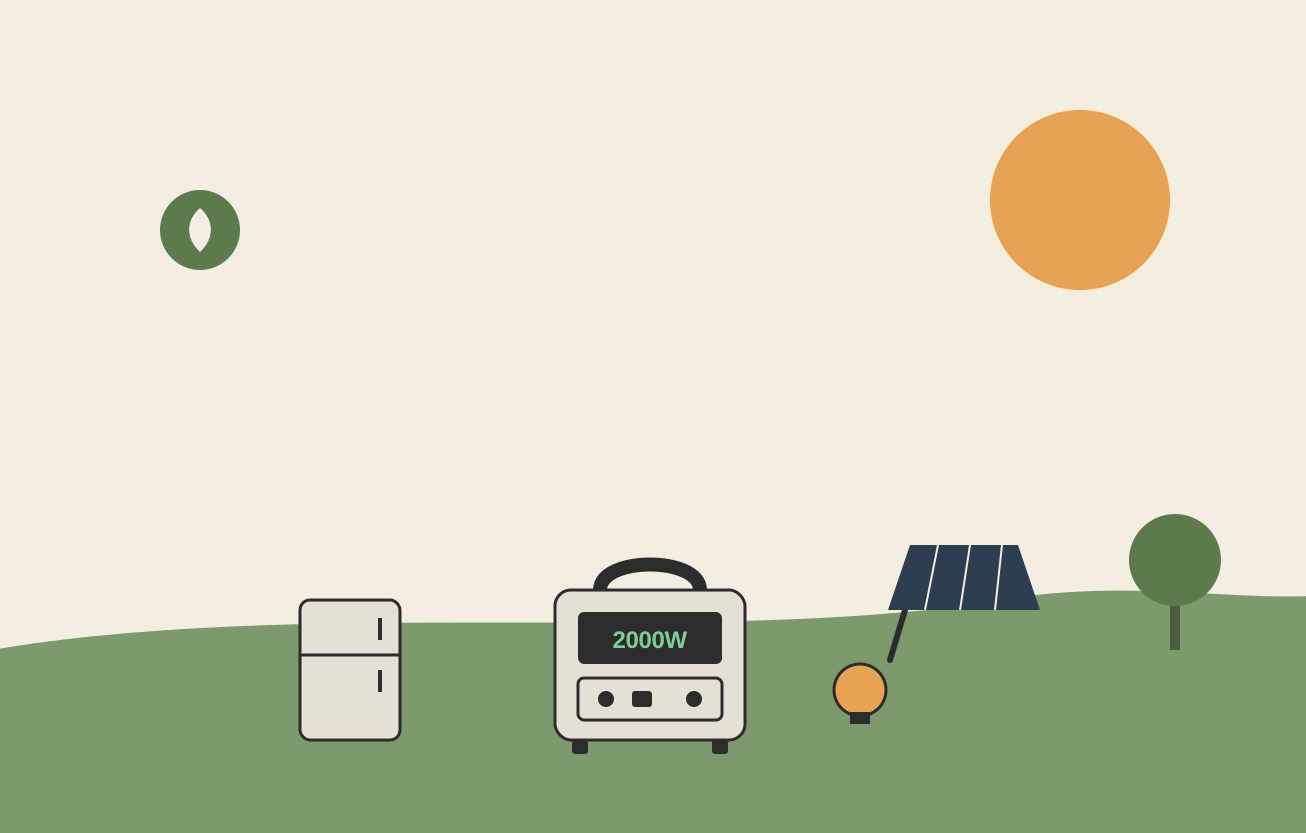
A 2000W solar generator can run many common household appliances, including refrigerators, TVs, lights, laptops, fans, Wi-Fi routers, and some kitchen appliances. However, how long it runs them depends on the generator’s battery capacity, measured in watt-hours (Wh), as well as the appliance’s power consumption.
In this guide, we’ll look at exactly what a 2000W solar generator can run, how many appliances you can use at once, and how to estimate runtime before choosing a model.
A 2000W solar generator can power most small and medium-sized household appliances, provided their combined power demand stays below the generator's output limit.
Here are some common examples:
Keep in mind that these are typical power ranges. Actual consumption varies by appliance, and some devices—especially refrigerators, pumps, and power tools—can require considerably more power when starting.
A 2000W generator can also run several lower-power devices at the same time. For example, a refrigerator using 200W, a TV using 100W, a laptop using 60W, and lights using 40W would have a combined load of about 400W.
A 2000W solar generator can run multiple appliances at the same time, as long as their combined power consumption stays below its 2000W continuous output.
For example, you could potentially run:
- Refrigerator: 200W
- TV: 100W
- Laptop: 60W
- Wi-Fi router: 15W
- LED lights: 40W
Total load: about 415W
That leaves plenty of capacity for other small devices.
The important thing is to add up the running watts of the appliances you want to use. You should also account for startup or surge power, which can be significantly higher than an appliance's normal running wattage.
Appliances with motors or compressors, such as refrigerators, freezers and some power tools, can briefly require extra power when they start. Check the generator's surge output rating before connecting these appliances.
A 2000W rating therefore doesn't mean you should continuously operate the generator at exactly 2000W. Leaving some capacity available gives you more flexibility when appliances start up or their power demand changes.
A 2000W rating tells you how much power the solar generator can deliver at once. It does not tell you how long it will run an appliance.
For runtime, you need to look at the generator's battery capacity, which is measured in watt-hours (Wh).
A simple estimate is:
Runtime = Battery Capacity (Wh) × 0.85 ÷ Appliance Power (W)
The 0.85 accounts for typical energy losses during conversion.
For example, a 2,000Wh solar generator powering a 100W appliance could provide roughly:
2,000 × 0.85 ÷ 100 = 17 hours
At a higher load of 500W, the same battery would provide approximately:
2,000 × 0.85 ÷ 500 = 3.4 hours
And at 1,500W, runtime would drop to about:
2,000 × 0.85 ÷ 1,500 = 1.1 hours
Actual runtime will vary depending on the appliance, inverter efficiency, battery condition, and other factors.
This is why you should look at both the wattage rating and battery capacity when choosing a 2000W solar generator. A model with a 2000W inverter but a smaller battery may run high-power appliances for a much shorter time than a model with a larger Wh capacity.
Yes, a 2000W solar generator can usually run a standard household refrigerator. Most refrigerators use relatively little power while running, but their compressors can require a higher surge of power when they start.
A typical refrigerator may use around 100–300W while running, although actual consumption varies by model, size, age, and efficiency.
When choosing a solar generator for a refrigerator, look for:
- At least 2000W of continuous output
- A higher surge rating to handle compressor startup
- Enough battery capacity in Wh for your desired runtime
- A pure sine wave inverter for compatibility with sensitive electronics
Battery capacity is particularly important if you want to keep the refrigerator running during a power outage. A 2000W inverter may be powerful enough to operate the refrigerator, but a small battery could still run out after only a few hours.
For longer backup periods, a solar generator with 2,000Wh or more of battery capacity can provide considerably more usable energy, especially when combined with solar panels for daytime recharging.
Yes, a 2000W solar generator can usually run a microwave, but you need to check the microwave's power requirements.
Most household microwaves use around 800–1,500W while operating. A 2000W solar generator therefore has enough continuous output for many models.
However, running a microwave uses a lot of battery power compared with low-wattage devices such as a TV or LED lights. For example, a 1,200W microwave running for 10 minutes would consume roughly 200Wh before accounting for conversion losses.
For the best results, check both the microwave's running wattage and the solar generator's continuous and surge output ratings before connecting it.
A 2000W generator is generally better suited to using a microwave for short periods rather than powering high-wattage kitchen appliances continuously.
A 2000W solar generator is powerful enough for many everyday appliances, but it is not designed to power every household device.
High-power appliances such as central air conditioners, electric dryers, electric water heaters, large ovens, and some well pumps can exceed the generator's output capacity. Some appliances may also have a high startup surge that temporarily requires more power than the generator can provide.
Even when an appliance is technically below 2000W, running it at a high load can drain the battery quickly. For example, a 1,500W space heater can use a large amount of stored energy in a relatively short time.
Before connecting an appliance, check:
- Running watts: The power it normally uses.
- Starting watts: Extra power required when it starts.
- Generator continuous output: Ideally higher than the combined running load.
- Generator surge output: Important for appliances with motors or compressors.
- Battery capacity: Determines how long the appliance can actually run.
If an appliance exceeds the generator's continuous or surge rating, it should not be connected. For larger household loads, a higher-output power
If you're buying a 2000W solar generator, don't look at the 2000W output rating alone. The battery capacity, surge rating, solar charging speed, and battery chemistry can make a significant difference in real-world performance.
Look for at least 2000W of continuous AC output if you want to power appliances such as refrigerators, microwaves, or coffee makers.
A higher surge rating helps the generator handle appliances with motors and compressors that briefly require extra power when starting.
Battery capacity is measured in watt-hours (Wh). A larger battery generally means longer runtime.
For regular home backup, a model with 1,500–2,000Wh or more can be more useful than a smaller battery paired with the same 2000W inverter.
Many newer solar generators use LiFePO4 (lithium iron phosphate) batteries, which are known for their long cycle life and stable performance.
Check how much solar power the generator can accept. A higher solar input can allow the battery to recharge faster when using compatible solar panels.
Some models allow additional batteries to be connected, increasing total storage capacity. This can be useful if you plan to use the generator for extended power outages.
If you want backup power for devices such as a refrigerator, router, computer, or home office equipment, a model with UPS functionality can automatically switch to battery power when the grid goes down.
The right combination depends on what you plan to power. For occasional camping, a smaller battery may be sufficient, while home backup generally benefits from more battery capacity and faster solar charging.
If you need a 2000W solar generator for home backup, camping, or emergency power, focus on models that combine a 2000W-or-higher inverter with a reasonably large battery capacity.
Here are a few specifications to compare when choosing a model:
The best choice depends on what you need to power. If your priority is keeping a refrigerator, lights, internet equipment, and other essentials running during an outage, prioritize battery capacity and surge capability rather than focusing only on the 2000W output rating.
Finding a portable power station with exactly 2,000W of continuous AC output can be surprisingly difficult, as many manufacturers have moved toward 2,400W and higher output classes. For that reason, the generators featured below are slightly above the 2,000W mark. In practical terms, that extra output means these models should comfortably handle the appliances and everyday loads discussed in this guide, provided their combined running wattage stays within the generator's continuous output rating and any startup surge is supported. Just remember that battery capacity (Wh), not just inverter wattage, determines how long those appliances will actually run.
Exact 2,000W portable power stations can be surprisingly difficult to find. These three models sit close to or above the 2,000W mark and should comfortably handle the everyday appliances and essential loads discussed in this guide, provided their combined running wattage and startup surge stay within the unit's limits.

With 2,200W of output and roughly 2,000Wh of battery capacity, the Explorer 2000 sits very close to the power class we're discussing and has enough headroom for common emergency loads.

Its higher output gives you more room for appliances with larger startup demands or for running several loads together without sitting right at the 2,000W ceiling.

With a battery capacity around 2,000Wh and output above the 2,000W class, the AC200PL is well suited to the refrigerators, electronics, lighting, and kitchen appliances covered in this guide.
For a comparison of specific models, see our guide to the Best Portable Solar Generators With Panels.
A 2000W solar generator can run many of the appliances you use every day, including refrigerators, TVs, lights, fans, laptops, Wi-Fi routers, and some kitchen appliances. The main limitation is not just the generator's 2,000W output, but also the battery capacity and the amount of power each appliance consumes.
For short periods, a 2000W unit can handle higher-wattage appliances such as microwaves, coffee makers, and toasters. For longer backup, however, choosing a model with around 1,500–2,000Wh or more of battery capacity will give you considerably more usable runtime.
Before buying, check the generator's continuous output, surge capacity, battery size, solar charging input, and expansion options. Choosing the right combination of these specifications will determine how useful your solar generator is for camping, off-grid power, or keeping essential appliances running during an outage.