Living off the grid means reducing or eliminating your reliance on public utilities and taking responsibility for your own basic needs. This can include generating your own electricity, securing a reliable water supply, managing wastewater, heating your home, and reducing your dependence on outside infrastructure.
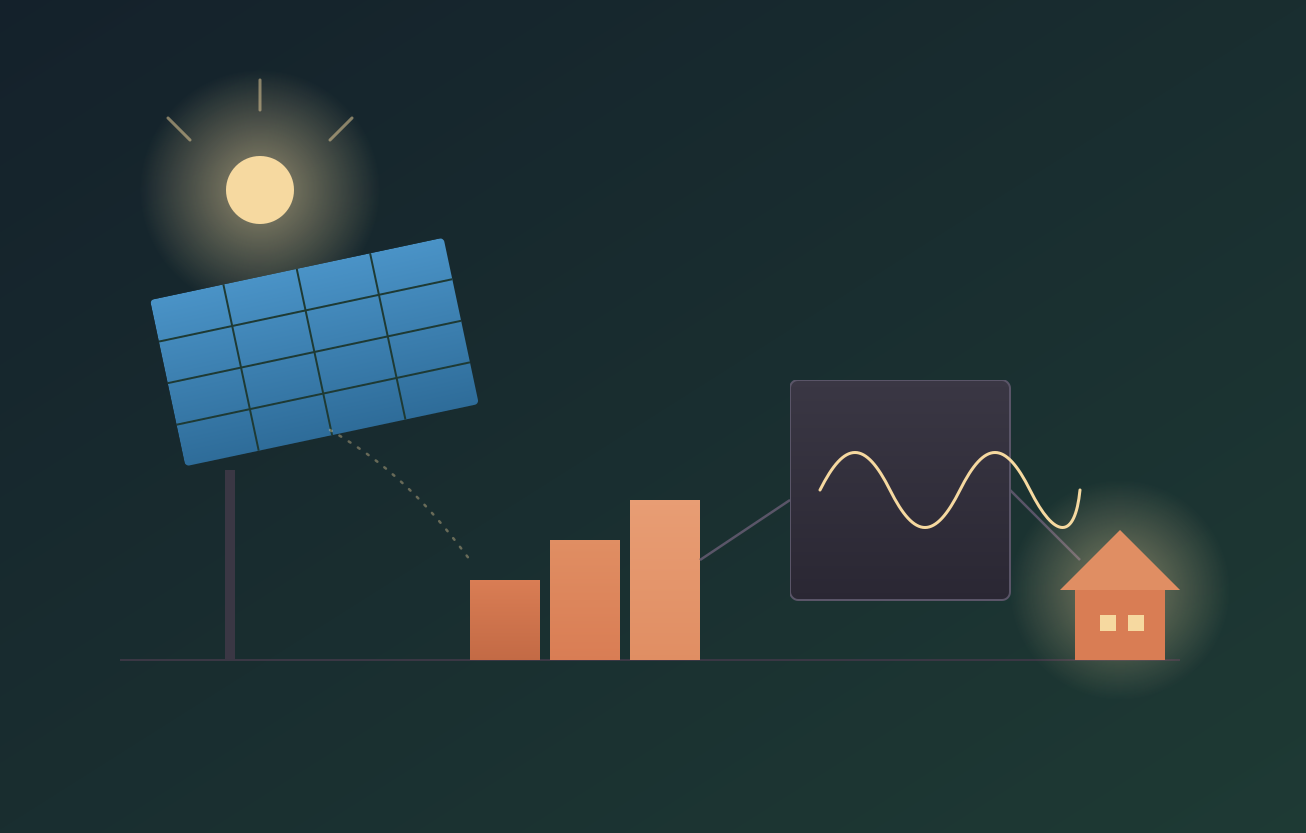
For some people, that means a fully self-sufficient home powered by solar and batteries. The U.S. Department of Energy's guide to solar energy explains how solar systems can be used to generate electricity and how battery storage can help provide power when solar production is unavailable.
Water and wastewater are just as important. Depending on the location, an off-grid property may rely on a well, rainwater collection, or another private water source, while wastewater may be handled through a septic system. The U.S. Environmental Protection Agency's guide to septic systems covers how these systems work and the maintenance they require.
But off-grid living is not one-size-fits-all. What you need will depend on where you live, the land you choose, your climate, your budget, and local regulations. The goal is not necessarily to disconnect from modern life completely, but to create a home that can meet its essential needs without depending on conventional utility infrastructure.
So, what does living off the grid actually involve? What do you need to get started, how much does it cost, and is it legal where you live? We'll break down the practical side of off-grid living, from the basic systems you'll need to the benefits, challenges, and first steps to consider.
The best way to start living off the grid is to work backwards from your everyday needs. Before buying equipment or building a home, determine what you need for power, water, heating, sanitation, and communication, and whether the property can legally support those systems.
If you're completely new to the idea, our guide to living off the grid for beginners is a useful place to start.
The property comes first. Check planning and building rules, access, water availability, wastewater requirements, and restrictions on alternative energy systems before buying. Local regulations can determine whether your plans are possible in the first place.
List everything that will use electricity, from refrigeration and lighting to cooking, heating, tools, and internet. Then size your system around your actual consumption.
For many homes, solar can provide the main source of electricity, but an off-grid system also needs energy storage and the right inverter equipment. The U.S. Department of Energy's guide to solar and storage explains how these systems work together.
Water needs to be reliable and safe. Depending on the property, you may use a private well, spring, rainwater collection system, or another permitted source. If you rely on a private well, the EPA's guidance on private drinking-water wells covers testing, maintenance, and common contamination risks.
You will also need a wastewater system. Septic systems are common in rural properties, but their placement and maintenance are important because wastewater can contaminate nearby drinking-water sources. The EPA's guidance on septic systems and drinking water explains the main risks and requirements.
You don't need to build a completely self-sufficient homestead from day one. Get the fundamentals working first:
Reliable power → safe water → wastewater → heating and cooling → shelter.
Once those systems are dependable, you can add food production, gardening, backup power, and other forms of self-sufficiency.
The basic principle is simple: build the infrastructure around the life you actually want to live, rather than trying to become completely self-sufficient all at once.
Living off the grid means your home operates without relying on public utility networks for its essential services. Instead, you take responsibility for electricity, water, wastewater, heating, and often communications.
Most off-grid homes generate electricity themselves, with solar panels and battery storage being one of the most common setups. A properly configured inverter is also needed to convert and manage the electricity for household use. The U.S. Department of Energy's guide to solar and energy storage explains how these systems work together.
You need a reliable source for drinking, cooking, washing, and everyday use. Depending on the property, this could be a private well, spring, rainwater collection system, or another permitted supply. If you use a private well, the EPA's guidance on private drinking-water wells covers testing, maintenance, and water-safety considerations.
Off-grid living still requires a proper wastewater solution. A septic system is common where permitted, but its location and maintenance matter because wastewater can contaminate nearby groundwater and drinking-water wells. The EPA's guidance on septic systems and drinking water explains the main risks and precautions.
Heating can be one of the biggest energy demands in an off-grid home. Good insulation and an efficient building design reduce that demand. Depending on the climate and setup, heating and cooking may use wood, propane, electricity, heat pumps, or a combination of sources.
If you're considering electric heating, it's worth looking at whether a heat pump is worth it for your particular home and climate.
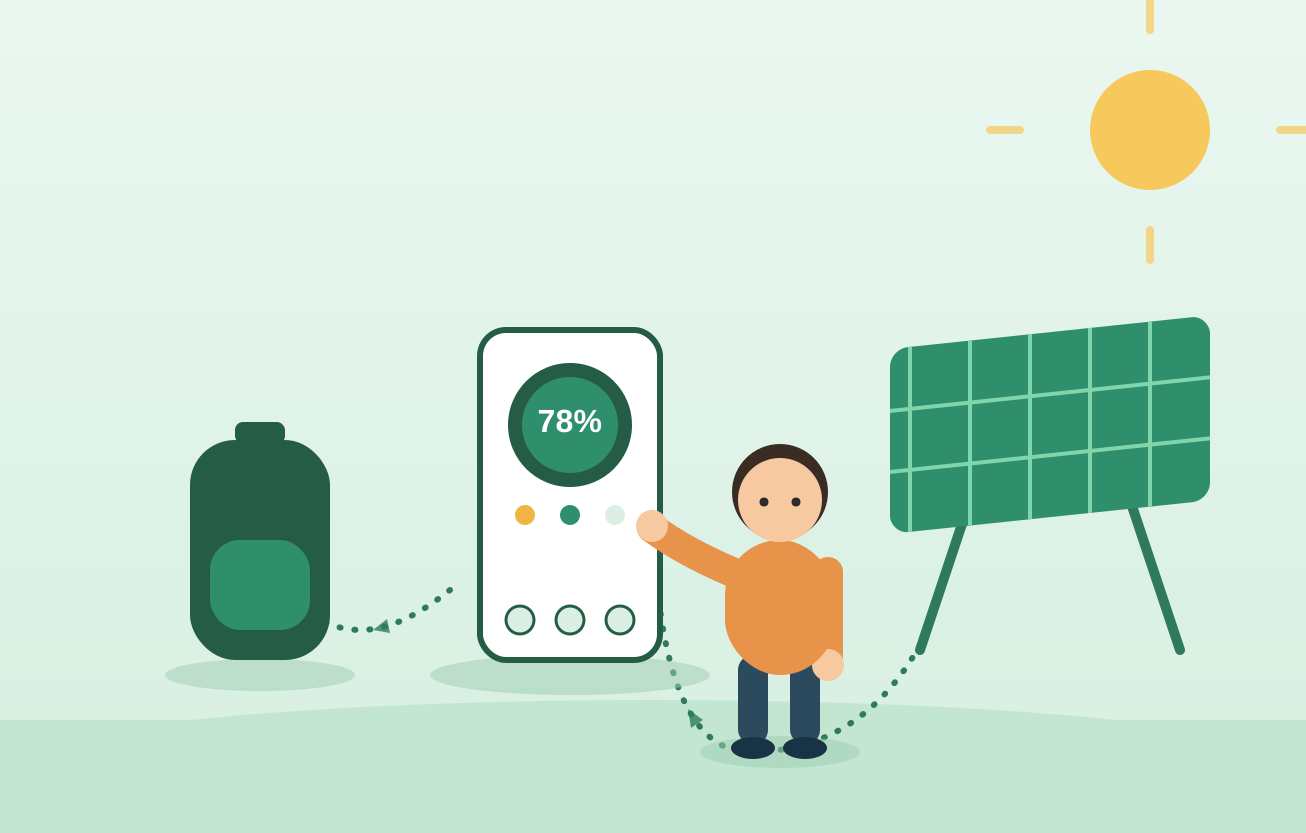
The biggest change is that you become responsible for systems that utilities normally manage for you. You monitor battery levels, water supplies, filters, fuel, wastewater systems, and equipment maintenance.
That's what off-grid living really involves: not simply living somewhere remote, but taking responsibility for the infrastructure that keeps your home running.
If you're interested in what these systems look like when they come together in practice, see our guide to off-grid homes.
Living off the grid starts with the basics: a suitable place to live, reliable power, a dependable water supply, sanitation, food, and a way to stay connected when necessary. The exact setup depends on your location, climate, budget, and how independently you want to live.
Before buying land or building anything, check local zoning, building regulations, access rights, water rules, and wastewater requirements. A remote property is not automatically suitable for off-grid living.
Look at the land itself too: sunlight exposure, drainage, road access, soil, existing trees, and the availability of groundwater or other water sources can make a major difference.
For many homes, solar is the main source of electricity. A typical system includes solar panels, an inverter, batteries, and a backup source such as a generator.
If you're looking at a smaller or simpler setup, our guide to off-grid solar kits covers what these systems typically include and how to choose one.
The important step is calculating your actual electricity needs first. The U.S. Department of Energy's Off-Grid or Stand-Alone Renewable Energy Systems guide explains how these systems are designed and what components are required.
Water can come from a well, spring, rainwater collection system, or another permitted source. The right option depends heavily on the property and local regulations.
If you use private well water, testing matters. The U.S. Environmental Protection Agency recommends that private well owners test their water regularly for potential contaminants. EPA — Private Drinking Water Wells
Being off-grid does not mean ignoring wastewater rules. Depending on the property, you may need a septic system, composting toilet, greywater system, or another approved solution.
This is one area where local regulations should be checked before construction rather than after. Requirements vary considerably by location.
You do not need to grow everything yourself. Many off-grid households combine gardening, food preservation, buying staples, keeping small livestock, or hunting and fishing where legal.
The goal is usually resilience rather than complete self-sufficiency. Having several ways to obtain food is often more practical than trying to produce 100% of it yourself.
Remote living can mean fewer nearby services, so communication becomes part of your infrastructure. Depending on where you live, this could mean mobile service, satellite internet, radio, or satellite communication.
It is also worth planning for power failures, extreme weather, medical emergencies, vehicle problems, and periods when roads become inaccessible.
You do not need to build a completely self-sufficient homestead on day one. A practical off-grid setup can start with a suitable property, modest solar system, reliable water source, legal wastewater solution, and a realistic understanding of your daily energy and resource needs.
The more remote the property, the more important it becomes to design these systems before you move in—not after something goes wrong.
The three systems that determine whether an off-grid home is genuinely livable are energy, water, and wastewater. Each needs to work independently, and the systems should be designed together from the start.
Solar panels are the most common source of off-grid electricity, usually combined with batteries and an inverter. Some homes also use wind, micro-hydro, or a generator for additional capacity or backup.
The inverter is particularly important because it determines how power is converted and delivered to the home. If you're comparing equipment, our guide to the best off-grid inverters covers the main options for different system types.
The key is to size the system around your actual consumption. A home that uses little electricity can operate with a relatively small system, while electric heating, air conditioning, large appliances, and workshop equipment can dramatically increase the required capacity.
The U.S. Department of Energy's guide to stand-alone renewable energy systems explains the main components and considerations when designing an independent power system.
Your water system starts with the property. A well, spring, rainwater collection system, or combination of sources can provide water, depending on local conditions and regulations.
Storage is important because supply and demand do not always match. You also need appropriate filtration and treatment if the water is intended for drinking.
For private wells, the EPA's guidance on private drinking-water wells covers testing, maintenance, and common contamination concerns.
Every home produces wastewater, even when it has no sewer connection. A properly designed septic system, composting toilet, or other approved treatment system is therefore essential.
Septic systems need suitable soil, adequate space, and regular maintenance. Poorly designed or maintained systems can contaminate groundwater and nearby water sources. The EPA's septic-system guidance provides an overview of how these decentralized systems work.
These aren't separate projects. Your water system needs electricity to pump and treat water, your heating system affects your energy demand, and your wastewater system depends on the site's soil and drainage.
A good off-grid setup therefore starts with the property and works from there: understand the site, calculate your needs, choose the appropriate systems, and build in enough storage and backup capacity to handle periods when something doesn't work as expected.
That's what makes an off-grid home practical rather than simply remote.
There is no single price for going off-grid. The cost depends on land, the home itself, energy requirements, water access, wastewater, location, and how much work you can do yourself.
The biggest mistake is looking only at the price of the land. A remote property can become considerably more expensive once you add access roads, water infrastructure, septic, solar equipment, batteries, heating, construction, and permits.
The property is usually the biggest initial expense. Before buying, check whether you can legally build, whether there is year-round access, and what infrastructure the site will require.
Solar is one of the most common options for off-grid homes, but the cost depends heavily on how much electricity you need and how much battery storage is required. The U.S. Department of Energy's homeowner guide to solar explains the factors that affect system size, generation, installation, and overall cost.
For a genuinely off-grid system, remember that you're paying for more than panels. Batteries, inverters, wiring, installation, and other equipment all contribute to the total. The Department of Energy's solar PV cost benchmarks break down the major components of a solar system.
A well can require drilling, pumping equipment, storage, filtration, and testing. Rainwater collection can be another option where local conditions and regulations allow it, but it still requires tanks and treatment equipment.
A septic system or alternative sanitation system adds another infrastructure cost. It also comes with ongoing maintenance. The U.S. Environmental Protection Agency's guidance on septic-system maintenance notes that regular maintenance can help avoid much more expensive repairs or system replacement.
The building itself can range from a basic cabin to a fully equipped house. A smaller, well-insulated home can reduce both construction costs and the amount of energy required to heat and operate it.
Once the infrastructure is installed, ongoing costs can be lower in some situations. You may reduce or eliminate electricity, water, and sewer bills, while producing some of your own food can reduce certain household expenses.
But off-grid does not mean maintenance-free. Batteries eventually need replacement, pumps can fail, solar equipment needs maintenance, septic systems need servicing, and generators require fuel and upkeep.
Instead of asking “How much does an off-grid home cost?”, start with:
What do I actually need to live comfortably, and what can I realistically provide myself?
Build the budget around those requirements. Start with the essentials — land, shelter, water, power, sanitation, heating, and access — then add the systems and comforts you actually need.
The goal isn't to spend as little as possible. It's to build a setup that is affordable to install, practical to operate, and realistic to maintain over the long term.
The goal is not to spend as little as possible. It is to build a system that is affordable to install and affordable to maintain.
Living off the grid is generally legal, but being independent from public utilities does not mean being exempt from local laws. What you can build, where you can build it, and how you can use the property depends on the rules that apply to that location.
Before buying land, check five things:
Can you legally build there?
Zoning and planning rules determine whether residential construction is permitted and what type of home you can build.
Can you live there permanently?
A property may allow a cabin, tiny home, mobile home, or temporary structure without allowing it to be used as a full-time residence.
How will you handle water and wastewater?
Wells, septic systems, rainwater collection, and alternative sanitation can all be regulated locally. The U.S. Environmental Protection Agency's guidance on septic systems explains that permitting and requirements are typically handled by state or local authorities.
Do your energy systems require permits?
Solar panels, batteries, generators, and other electrical systems may require permits or inspections. The U.S. Department of Energy's guidance on solar permitting notes that requirements vary between jurisdictions.
Are there environmental restrictions?
Flood zones, wetlands, protected areas, waterways, and other site conditions can affect what you are allowed to build and where infrastructure can be placed.
There is no single set of “off-grid laws.” The rules depend on the country, region, municipality, and property.
Location can make a major difference as well. If you're still deciding where to live, our guide to the best states for off-the-grid living looks at some of the factors that make different areas more suitable.
Before purchasing land, contact the relevant planning, building, health, and environmental authorities and ask what is permitted on that specific parcel. Getting those answers before you buy is far easier than discovering restrictions after you've already invested in the property.
Off-grid living means becoming more independent from public infrastructure — not becoming independent from the law.
Off-grid living can offer more independence, lower reliance on public utilities, and greater control over how you use energy and resources. But it also means taking responsibility for systems that a conventional home normally gets from the grid.
You generate your own electricity, manage your own water, and handle your own waste. A well-designed system can also make you less vulnerable to utility outages.
Once the initial infrastructure is paid for, generating your own electricity can reduce or eliminate some recurring utility bills. The U.S. Department of Energy notes that solar can reduce electricity costs over time, although savings depend on the system, location, and energy use.
Living off-grid makes your consumption more visible. You know how much electricity you generate, how much water you use, and where your waste goes. For some people, that greater control is one of the main attractions.
For those who want more space, privacy, or a closer connection to their surroundings, an off-grid property can offer something that conventional housing often cannot.
Solar equipment, batteries, water systems, septic, heating, construction, and access can require significant investment before you even move in.
There is no utility company to call when your system fails. You may need to troubleshoot batteries, pumps, generators, water systems, or other equipment yourself or pay someone to repair them.
A long period of cloudy weather can affect solar production. A dry season can reduce water availability. A broken pump or failed battery can quickly become more than an inconvenience.
Remote living can mean longer drives for groceries, healthcare, repairs, schools, and other services. Internet and mobile coverage may also be limited.
That depends on what you want from it.
If your priority is complete convenience and minimal maintenance, off-grid living may not be the best fit. If you value independence and are comfortable maintaining your own infrastructure, the trade-offs can make sense.
The most sustainable approach is usually not trying to eliminate every connection to the outside world. It is building a home that can meet its essential needs reliably while keeping the level of complexity you are willing to manage.
You do not need to move to a remote piece of land and build everything at once. The easiest way to start is to reduce your dependence gradually and understand what the lifestyle actually requires.
For some people, it means producing all their own electricity and water. For others, it simply means having a home that can operate independently during outages.
Define what you actually want before spending money. The more independent you want to be, the more infrastructure, maintenance, and planning you will need.
The property can make or break an off-grid project. Look at sun exposure, water availability, soil, drainage, road access, internet and mobile coverage, climate, and local regulations.
Most importantly, confirm that you can legally build and live there. Check with the relevant planning and building authorities before buying.
Prioritize the things that make the home habitable:
- Shelter
- Reliable water
- Electricity
- Heating and cooling
- Wastewater and sanitation
- Food storage
- Communication
The U.S. Department of Energy's guide to stand-alone renewable energy systems is a useful starting point for understanding how independent power systems are designed.
A smaller home generally requires less energy, less heating, less water, and less infrastructure. That can make the entire project cheaper and easier to manage.
You can also test the lifestyle before committing fully. Spending extended periods in a small cabin, camper, or existing property can quickly show you what you actually need.
Off-grid does not mean every system needs to operate alone with no backup. Extra water storage, battery capacity, a generator, alternative heating, and multiple communication options can make the difference between a minor inconvenience and a serious problem.
The most important part of going off-grid is not buying equipment. It is understanding how that equipment works.
Know how to monitor your batteries, maintain your water system, deal with wastewater, conserve electricity, and respond when something fails.
Building those skills takes time, and learning from experienced homesteaders can help. For further reading, we've also put together a selection of books about living off the land
Start with the question: What do I need to live comfortably and reliably?
Then build from there. Choose the property carefully, understand the regulations, design the essential systems, start small, and leave room for upgrades.
A successful off-grid home is not the one with the most technology or the fewest connections. It is the one where the systems are reliable, the costs are manageable, and the people living there can actually maintain them.
Living off the grid is less about escaping modern life and more about taking responsibility for the systems that support it.
You are choosing where your electricity comes from, how you get and use water, how you manage waste, how you heat your home, and how prepared you are when something stops working. That can mean more freedom and lower dependence on utilities, but it also means more planning, maintenance, and responsibility.
The best approach is to start realistically. Choose the right property, understand the local rules, design around your actual needs, and avoid building more complexity than you can afford or maintain.
The key takeaway: you do not need to do everything at once. A well-planned, manageable off-grid setup is far more useful than an ambitious system that is expensive or difficult to maintain.